Skip to content
All services

UV CIPP Sewer Repair in Miami We cure your new sewer liner with UV light instead of steam or hot water.

UV CIPP is one way we cure a cured-in-place liner inside your sewer line. We inspect and clean your pipe, install a liner saturated with light-cured resin, then pass an LED UV light through it to harden a new pipe wall inside your old one. Here is where UV curing helps your repair, and where another cure fits your line better.

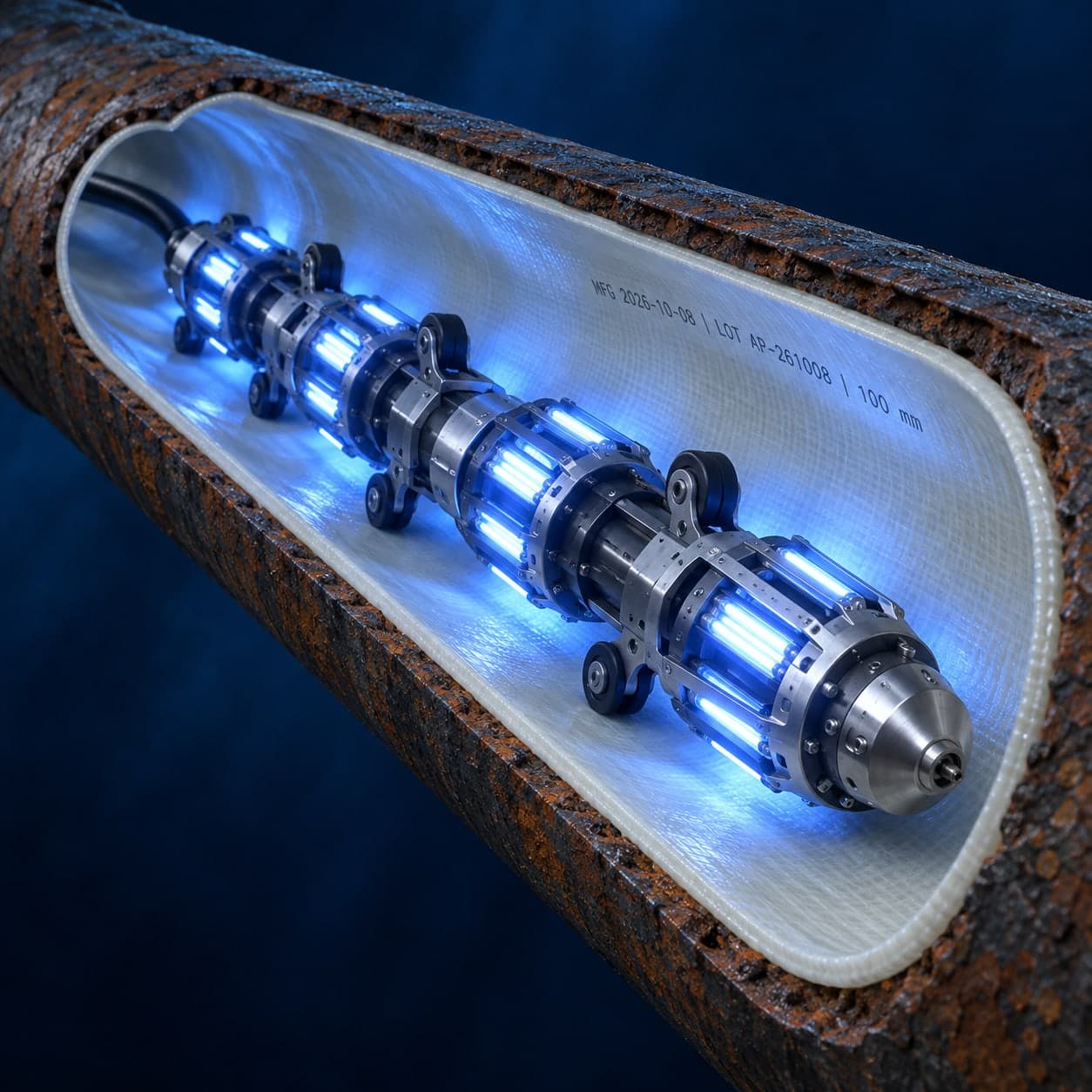
Cutaway of an LED UV light train curing a resin liner inside a corroded sewer pipeUV curing
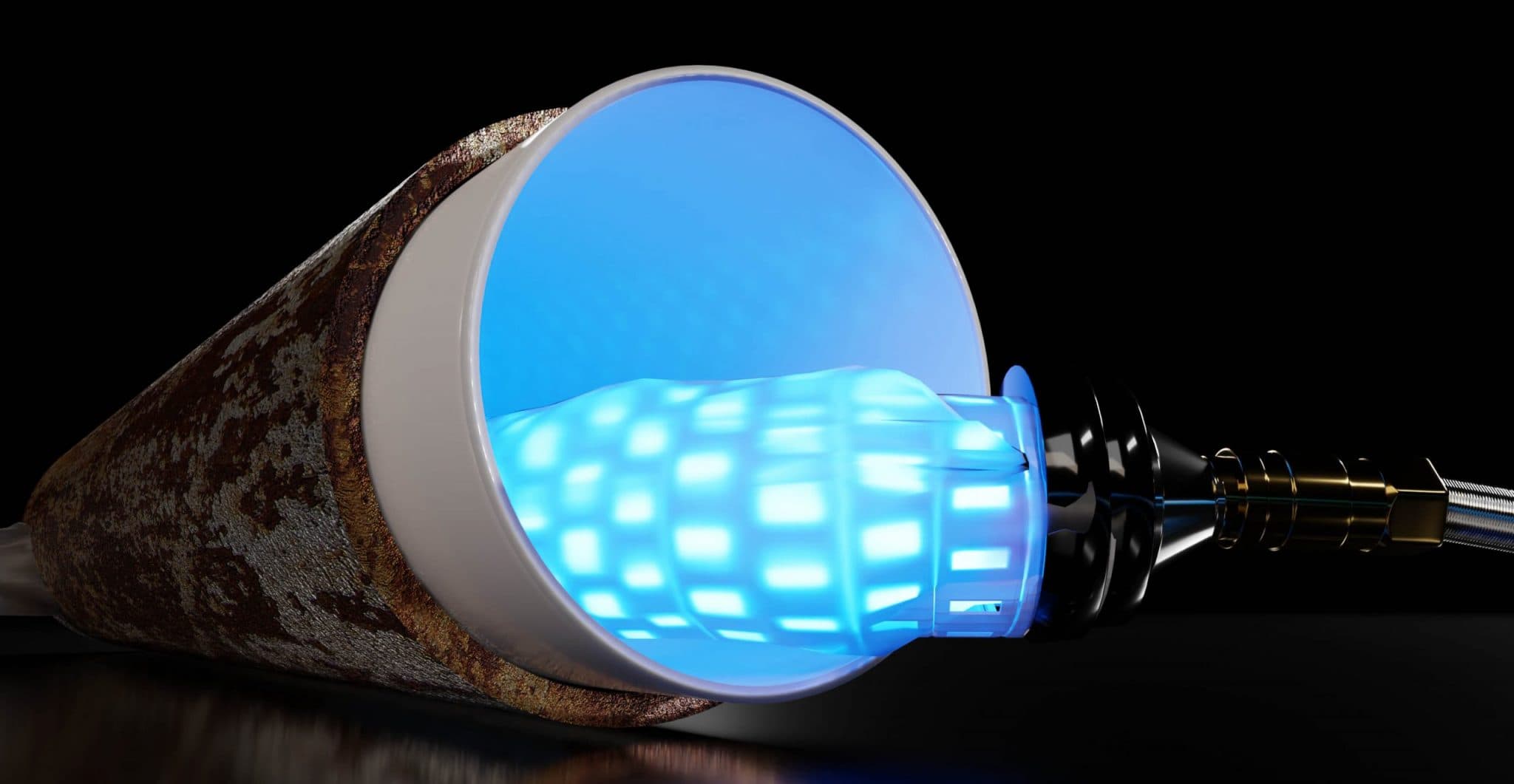
Illustration of a UV light head glowing inside a white liner within a rusted host pipeUV curing

What UV CIPP is

UV curing is one step inside a lining job, not a different repair.

CIPP stands for cured-in-place pipe. We put a resin-saturated liner inside your cleaned sewer, press it against your old pipe wall and cure the resin until it hardens into a new, jointless pipe. Every CIPP job needs that cure; what changes is how we trigger it.

With UV CIPP, the resin hardens under ultraviolet light. We inflate your liner, then move an LED light head through it at a controlled pace. Hot-water, steam and ambient cures reach the same result with heat or time instead of light.

Our trenchless pipe repair page explains how we decide whether your sewer can be lined at all. This page covers what changes when we cure your liner with light.

Why we cure with UV light

UV light changes how we cure your liner, not whether your pipe can be lined.

When your line is a good candidate for lining, curing with light gives us more control on site. These are the differences you notice on the day of your repair.

  • Your liner cures only when our light reaches it.

    Light-cured resin stays workable until UV light hits it, so we can position your liner in your pipe carefully before the cure begins.

  • We bring no boiler or steam to your property.

    We do not heat water or run steam through your line to cure it, so there is no boiler truck in your driveway and no hot cure water to drain away afterward.

  • We control the cure one section at a time.

    We run the cure from our LightRay controller and move the light through your liner at a set pace, so each section of your pipe receives the same exposure.

  • We plan the whole repair around your pipe.

    Cure time is one part of your visit. Cleaning, positioning, connections and final inspection also affect how long the work takes and when your plumbing can return to use.

How a UV lining job works

We line your pipe in five steps, and the UV cure is step four.

Most of our work on your sewer happens before and after the light goes in. You receive our written work plan for your line after our camera inspection.

  1. Step 1 of 5

    We record the inside of your line.

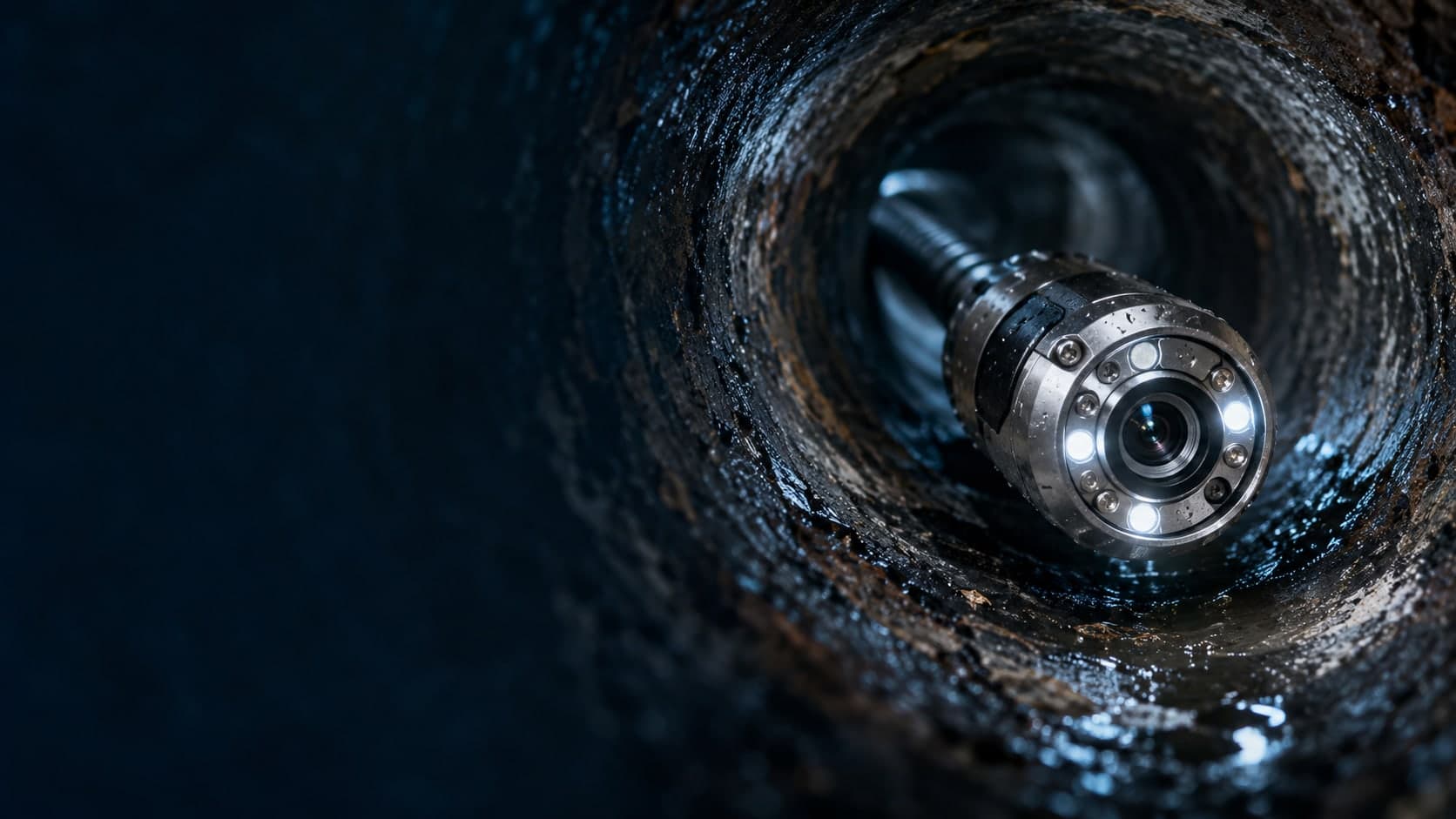
    We run our CCTV camera through your sewer from a cleanout and record the full run. You see the cracks, roots and scale on screen, and we tell you whether lining, and UV curing, suit what our camera shows.

    Illustration: a sewer inspection camera head lighting the inside of a corroded pipeCamera inspection
  2. Step 2 of 5

    We clean your pipe down to its wall.

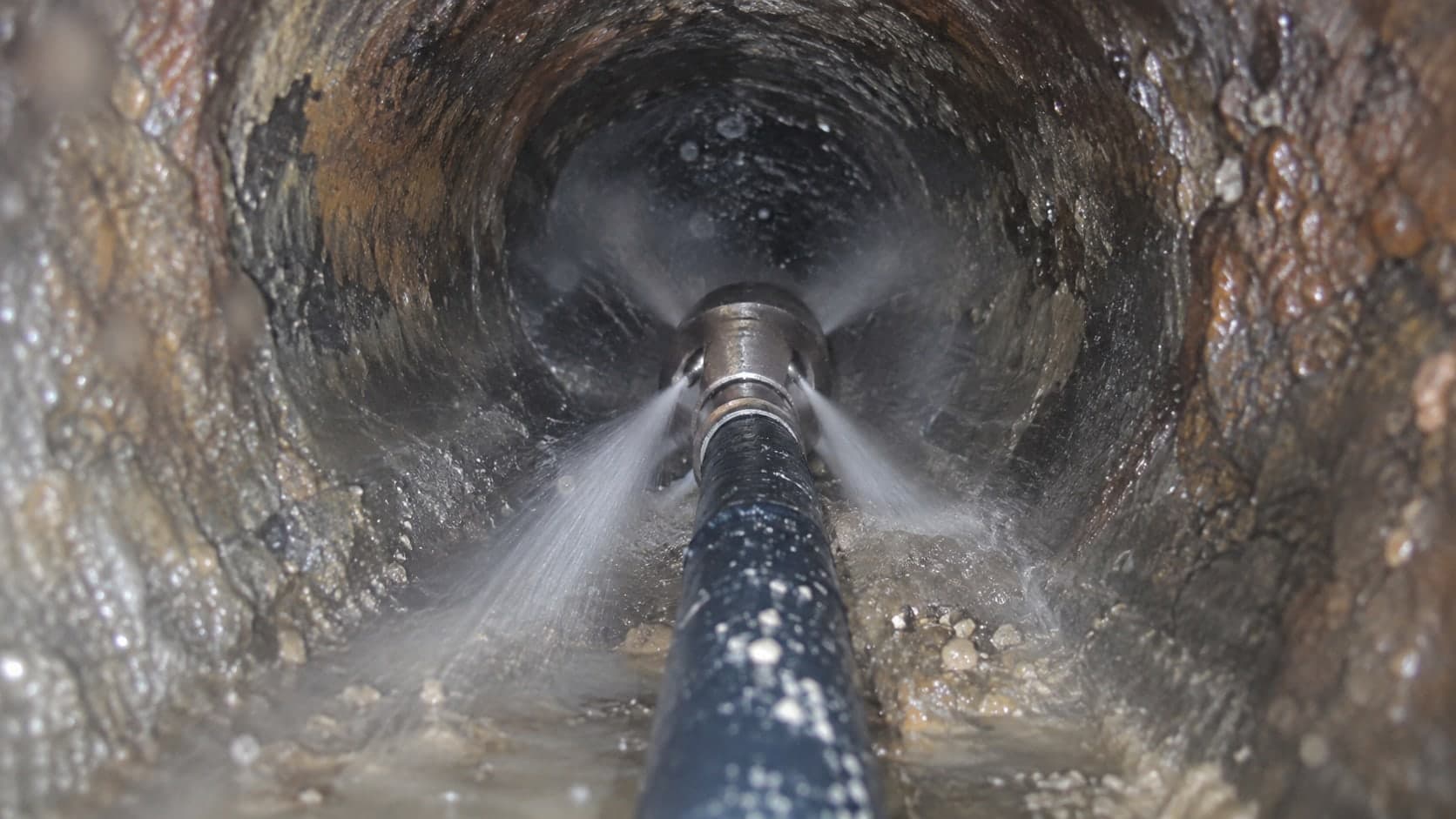
    We hydrojet and descale your line so your liner can press tight against the old pipe wall. Then we put our camera back in to check your cleaned pipe before we line it.

    Illustration: a hydro jetting nozzle spraying water inside a sewer lateralHydrojetting
  3. Step 3 of 5

    We install your resin-saturated liner.

    We pull your liner into position and inflate it so it presses against the full circumference of your old pipe. The resin stays uncured while we check its position.

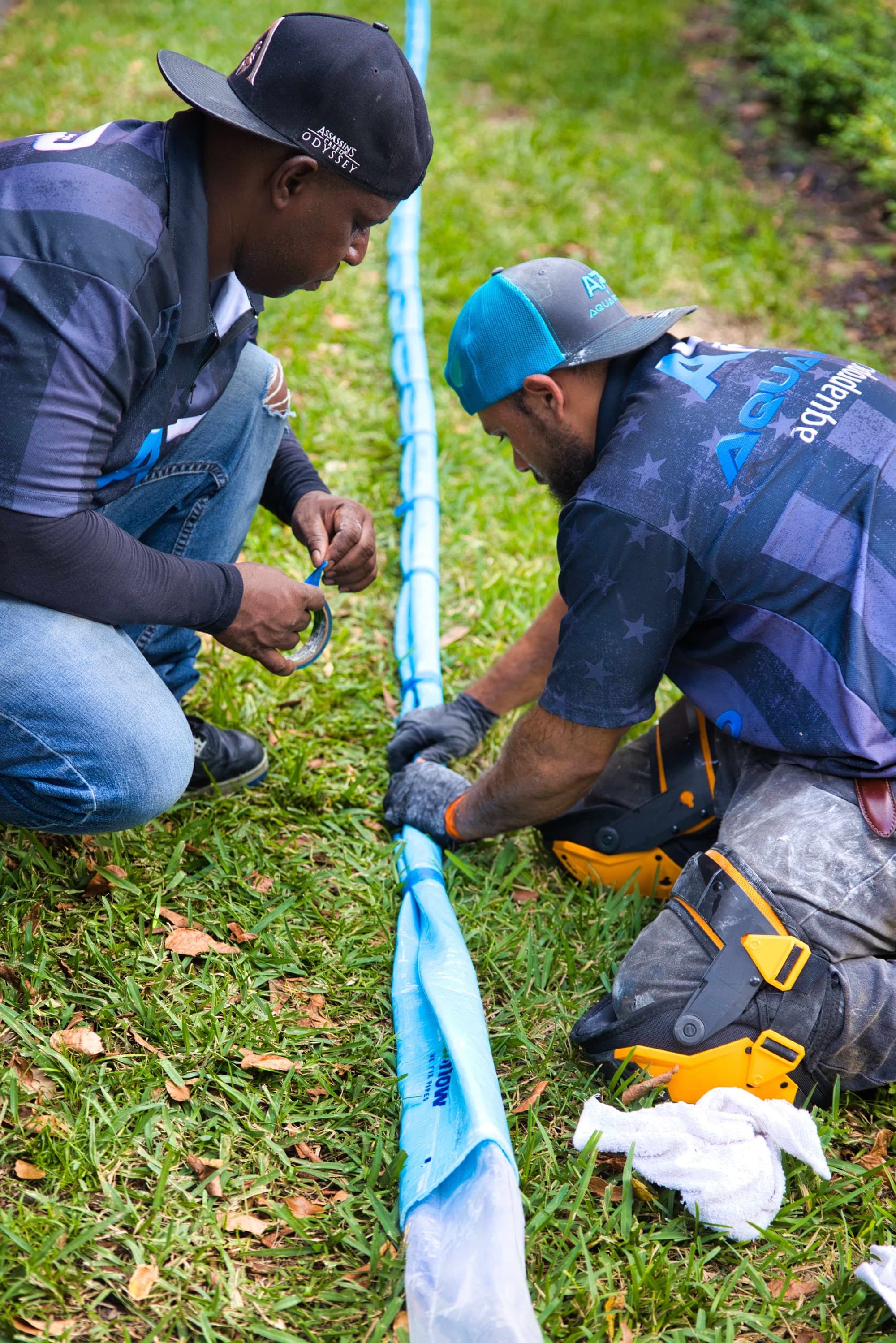
    Aqua Pro crew handling liner material on site
  4. Step 4 of 5

    We cure your liner with LED UV light.

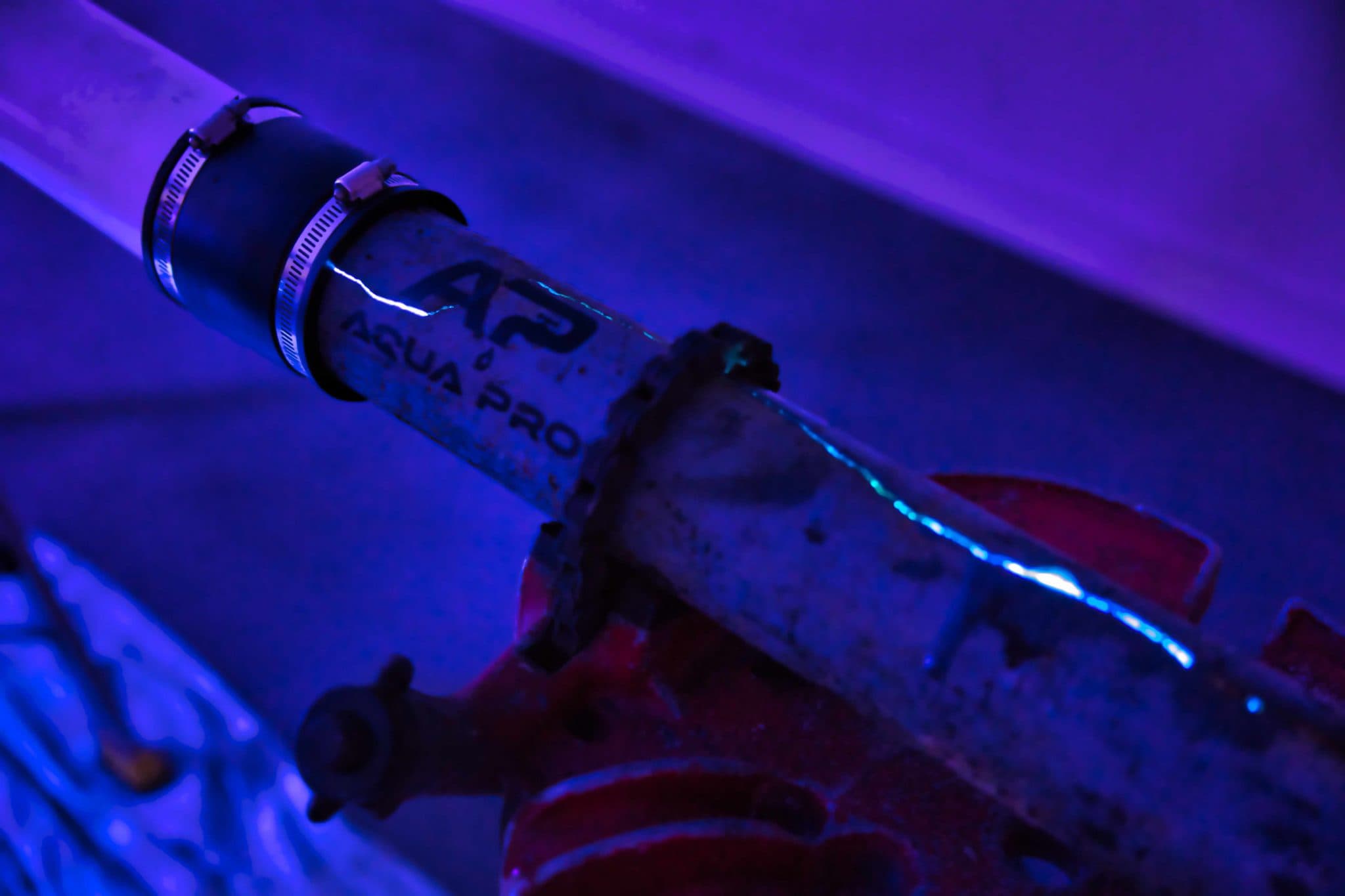
    We move the LightRay UV light head through your inflated liner. As the light passes, the resin hardens into a new pipe wall inside your old one, with no steam or hot water involved.

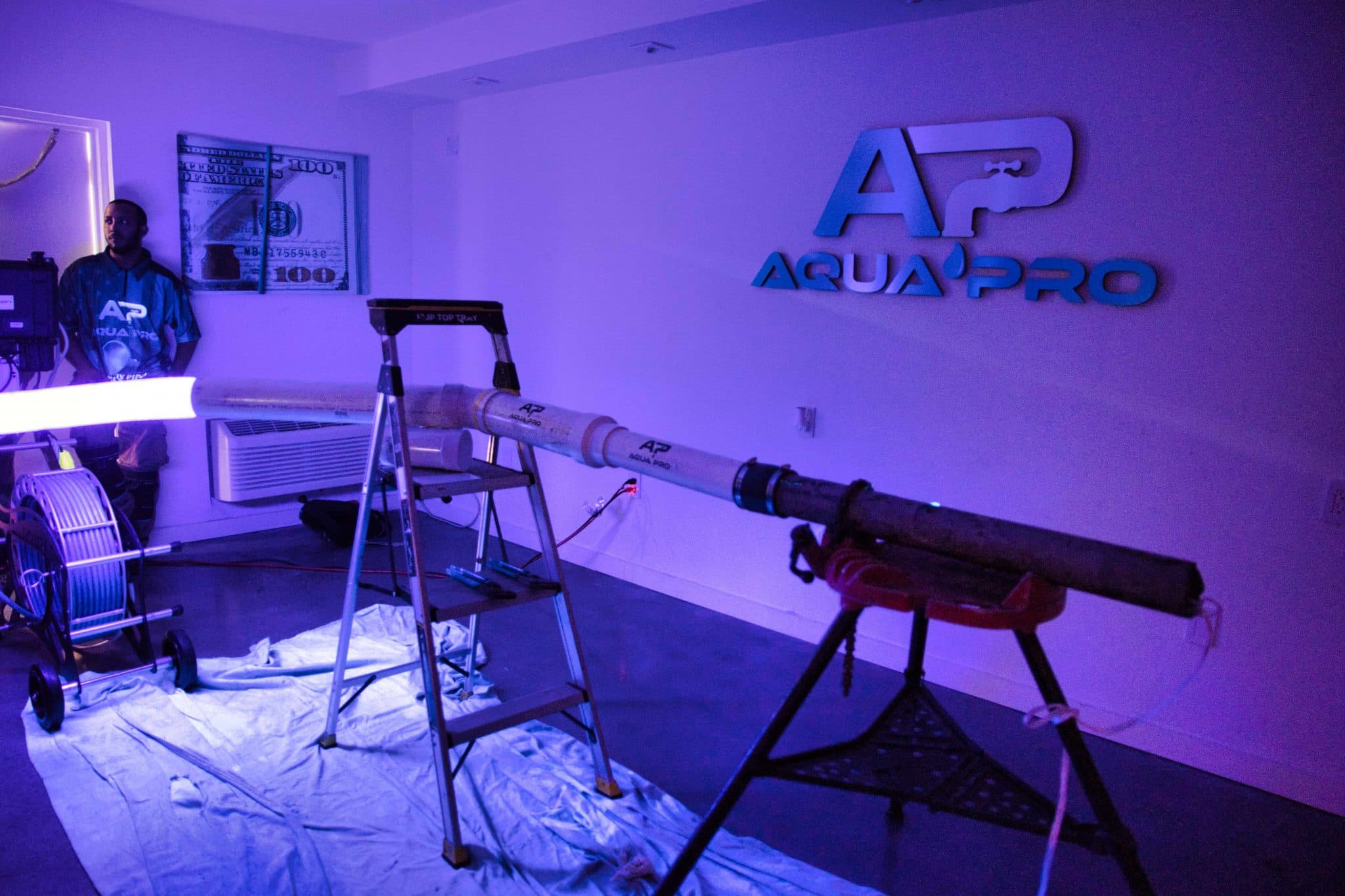
    UV light glowing through the joint of a test pipe during a LightRay cure in the Aqua Pro lab
  5. Step 5 of 5

    We reopen your connections and record your finished pipe.

    We reopen each branch drain from inside your cured liner, then run our camera through your line again. You keep the footage of your finished pipe for your insurer, a future buyer or your own records.

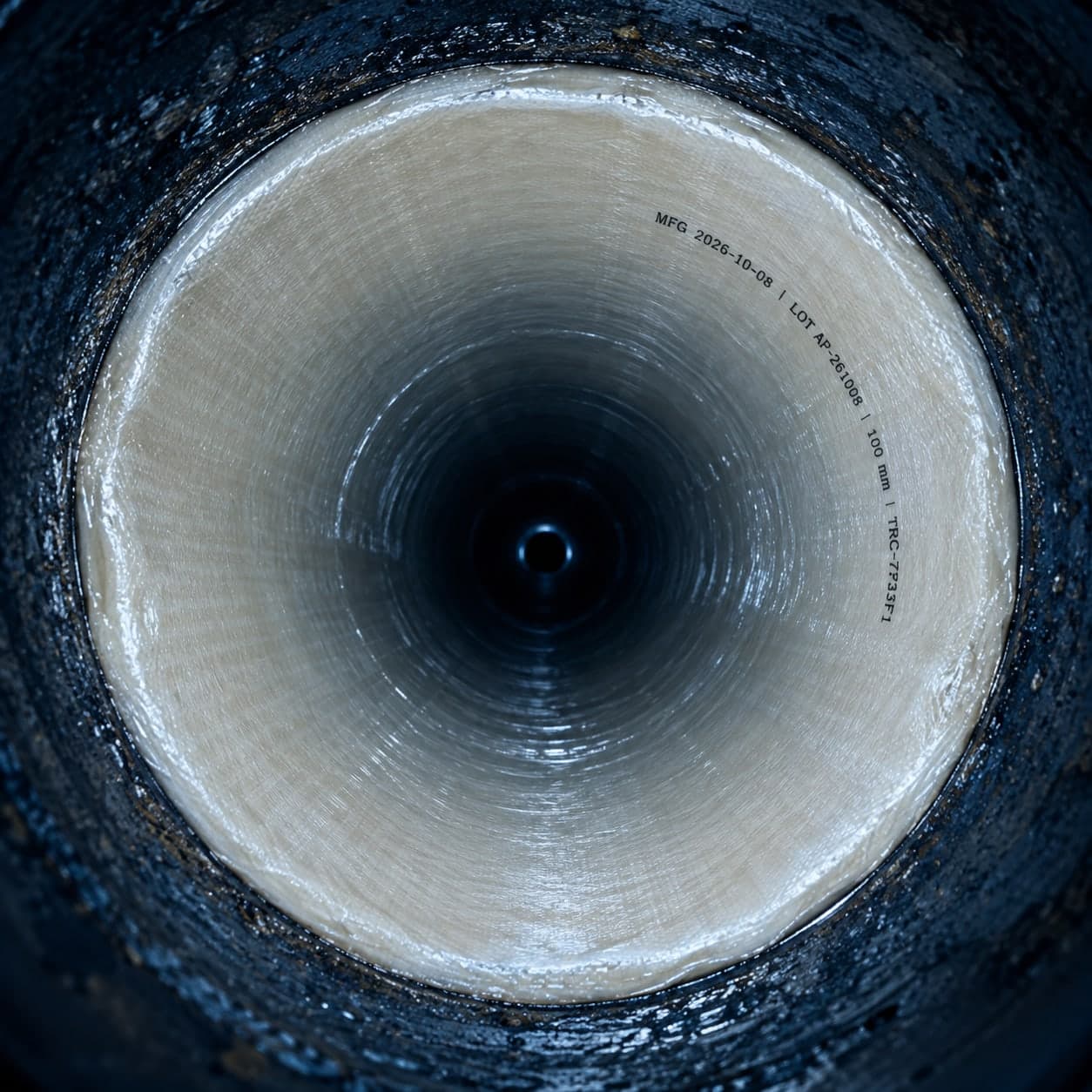
    Illustration: camera view down a smooth, cured liner inside a sewer pipeAfter lining
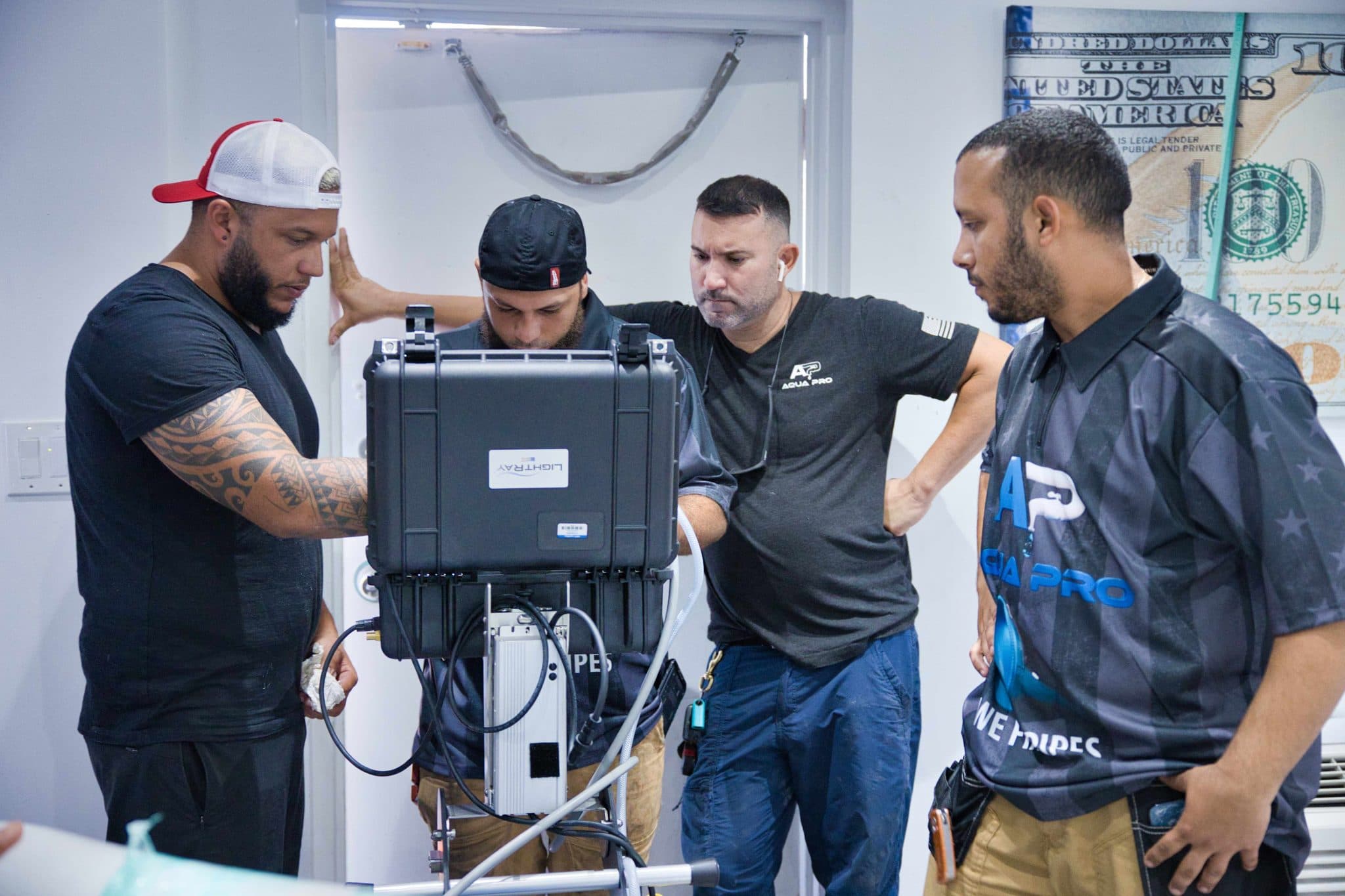
Four Aqua Pro team members gathered around a LightRay UV curing controller in the company lab

Our team watches the LightRay controller during a test cure in the Aqua Pro lab.

Tested in our lab

Our team runs LightRay UV cures in the Aqua Pro lab.

LightRay is an LED UV curing system made by Perma-Liner. These photographs are from our own lab, where our crew sets up the controller and light head and cures liners inside test pipes.

The photographs show our UV test setup. UV curing uses light rather than steam or hot water as the curing method; the equipment and resin still require the operating controls specified for the system.

When we recommend UV curing for your sewer, our proposal names the liner system and the cure we will use, so you can compare it line by line with any other proposal you receive.

When UV is not the right cure

Our camera tells us whether your line suits UV curing.

A UV liner needs the same sound pipe path as any other liner, plus a route our light head can travel. If our camera finds one of these conditions, our work plan for your line changes, and we tell you how.

  • A collapsed section needs replacement first.

    No liner can restore a pipe path that is gone. We open and replace a collapsed section of your sewer, then line the rest of your run.

  • Tight bends and size changes need a different plan.

    Our light head has to travel the full length of your liner. If your line turns through tight fittings or changes diameter, we may cure that run with hot water or ambient resin, or line it in separate sections.

  • A sagging section still holds water after lining.

    A liner follows your existing slope, so it does not lift a belly in your line. If our camera shows standing water, we discuss re-bedding that section with you first.

Before and after lining

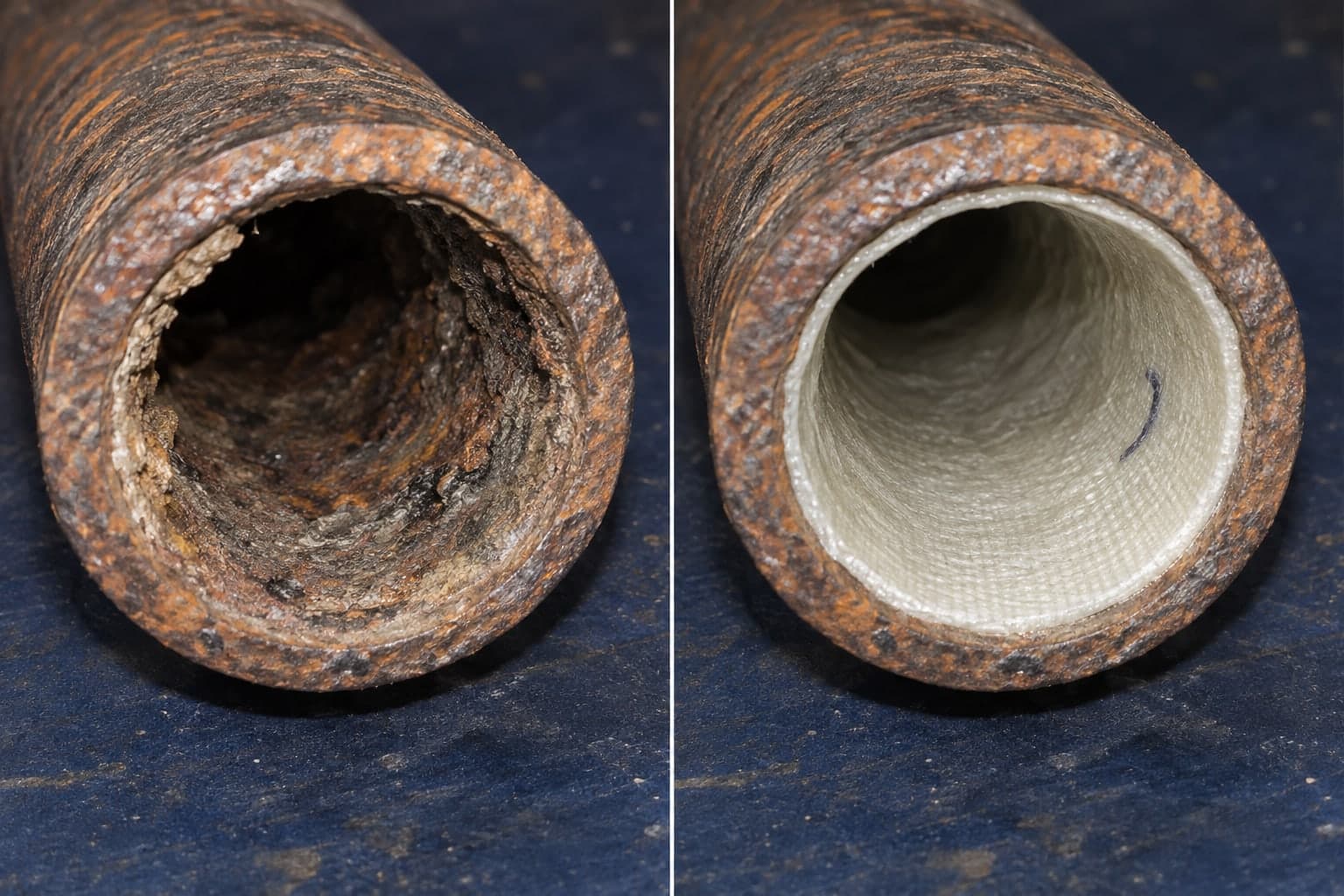
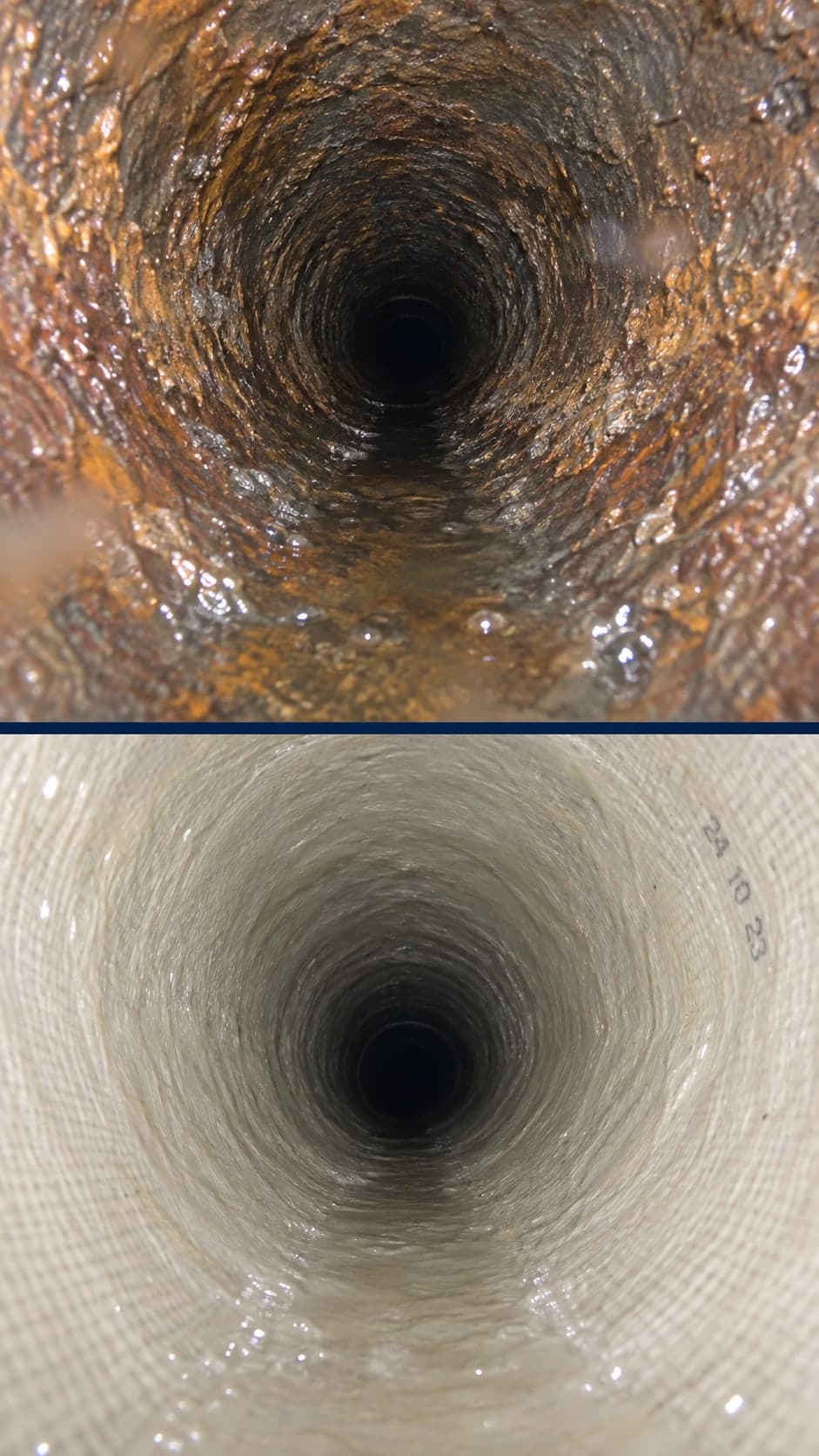
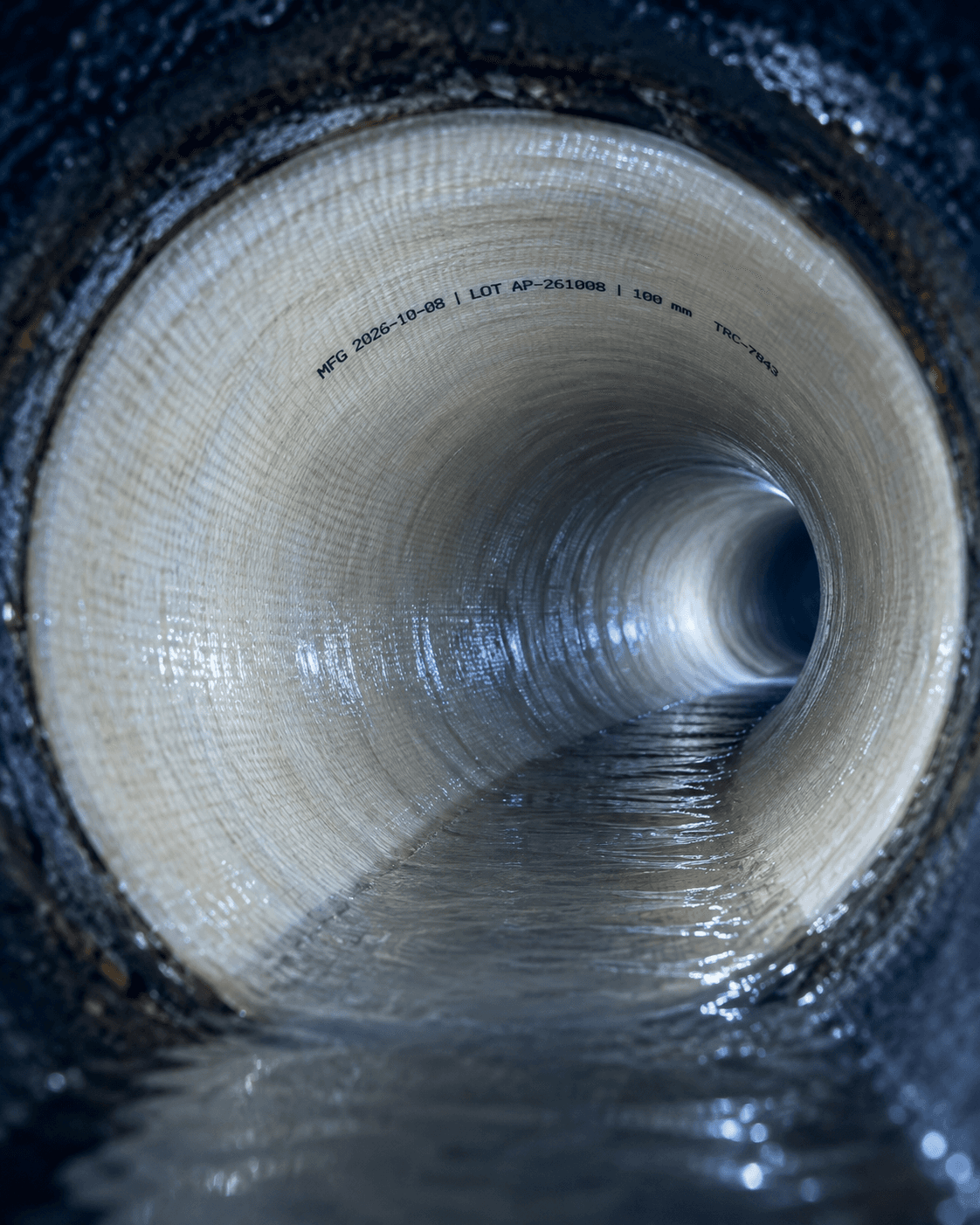
A UV-cured liner leaves the same smooth wall as any other cure.

These rendered comparisons illustrate the inner wall formed by lining. They are explanatory examples, not records of a particular customer repair.

  • Illustration: side by side views of a corroded pipe opening and the same opening after liningBefore and after lining
    BeforeAfter

    A corroded pipe opening becomes a clean, lined bore.

    The rendering compares a corroded opening with a lined bore. Your inspection records the condition and completed work in your own pipe.

  • Illustration: side by side views of a corroded vertical riser and the same riser after liningBefore and after lining
    BeforeAfter

    A vertical riser gets a new wall from the inside.

    We can line stacks and risers from an access point when their condition allows. Our camera shows which access your riser needs.

Our crew and equipment

These are our people and the equipment we use on your line.

Our crew photographs show lining equipment, preparation and the test setup. We explain who is handling your work and the planned sequence when arranging your repair.

A LightRay UV cure glowing through a clear test pipe on a pipe stand in the Aqua Pro lab
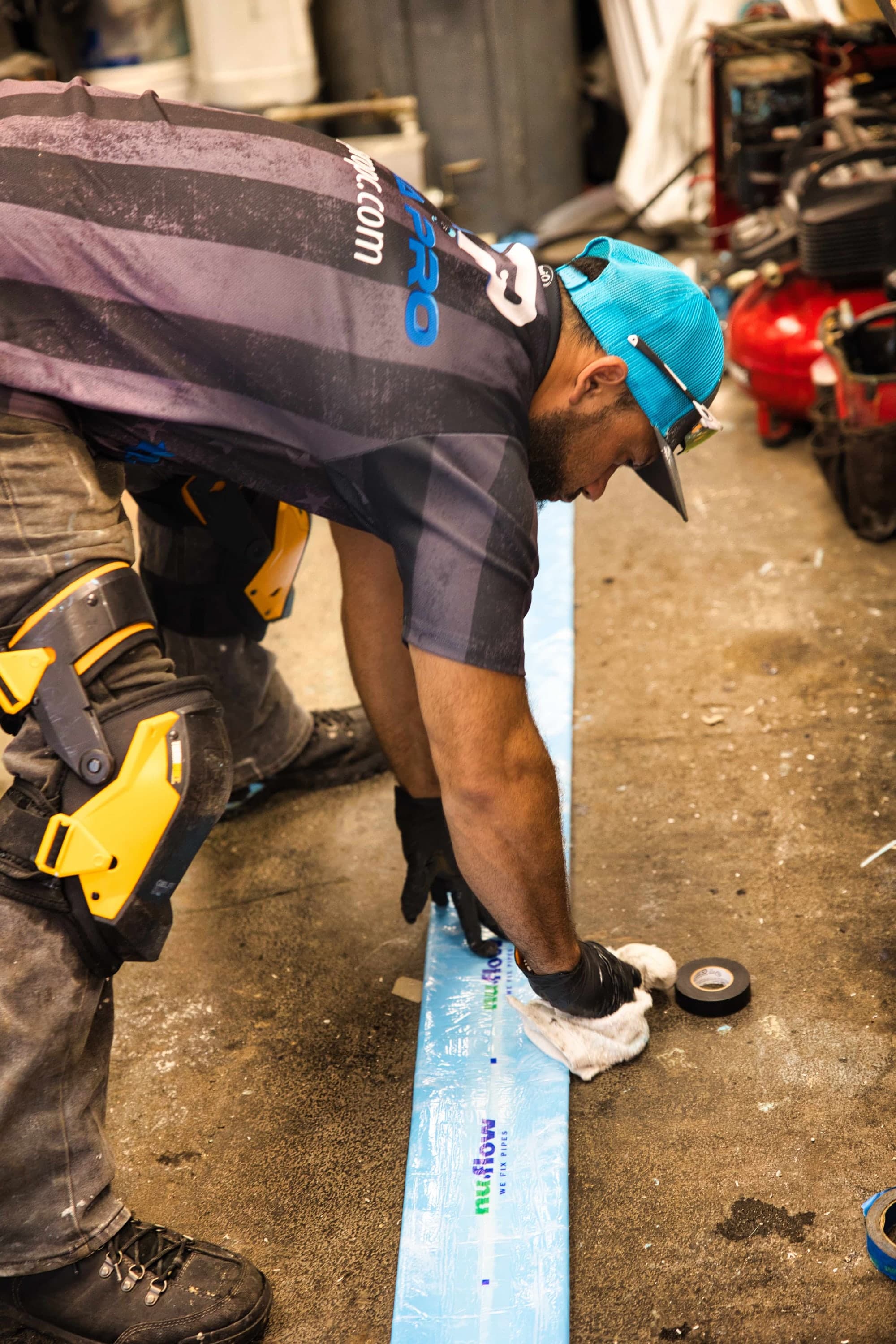
An Aqua Pro technician measuring liner material before an installation
Pipe lining equipment staged on a job site

The large photograph is a test cure in our lab. The others show our technicians and lining equipment on the job.

Common questions

What people ask us about UV lining.

Is UV lining suitable for every sewer?

No. The host pipe, bends, diameter changes, connections and route available to the curing equipment all affect suitability. We select the system after inspecting your line.

Does UV change the preparation?

Your pipe still needs inspection and preparation for the selected liner. Curing with light does not remove the need to clean, position the liner and check the completed repair.

Are the lab photos from a customer repair?

The UV lab photographs show our crew and equipment working with test pipes. The rendered pipe comparisons illustrate the process. Your project is assessed and documented separately.

Where we work

We serve Miami-Dade and Broward.

We offer UV CIPP lining across our Miami-Dade and Broward service areas. Tell us where your property is, what your drains are doing and whether you already have camera footage. You do not need to choose a curing method before you call.

We offer UV CIPP lining in Miami, Coral Gables, Coconut Grove, Cutler Bay, Doral and Miami Shores, and throughout Miami-Dade and Broward, including Fort Lauderdale.

Talk to a licensed plumber

Ask us whether UV lining fits your sewer line.

Describe the problem and we will tell you whether it needs a camera inspection, a cleaning or a repair. We explain our proposed work and price before you approve it, and financing is available on every repair we do.

See what decides your price

You approve your price in writing before we begin your repair. Here is what affects it:

  • Your pipe’s condition decides how much cleaning comes first.
  • The length and size of your line set the equipment and materials.
  • Your access point changes the setup.
  • The repair method follows what we find.
  • A shared building line is quoted differently from a household line.
Read about financing for your repair