
Step 1 of 4
We confirm how to access your line.
An accessible cleanout may provide an entry point. If another access method or opening is needed, we explain that work before proceeding. You do not need to locate a cleanout before contacting us.
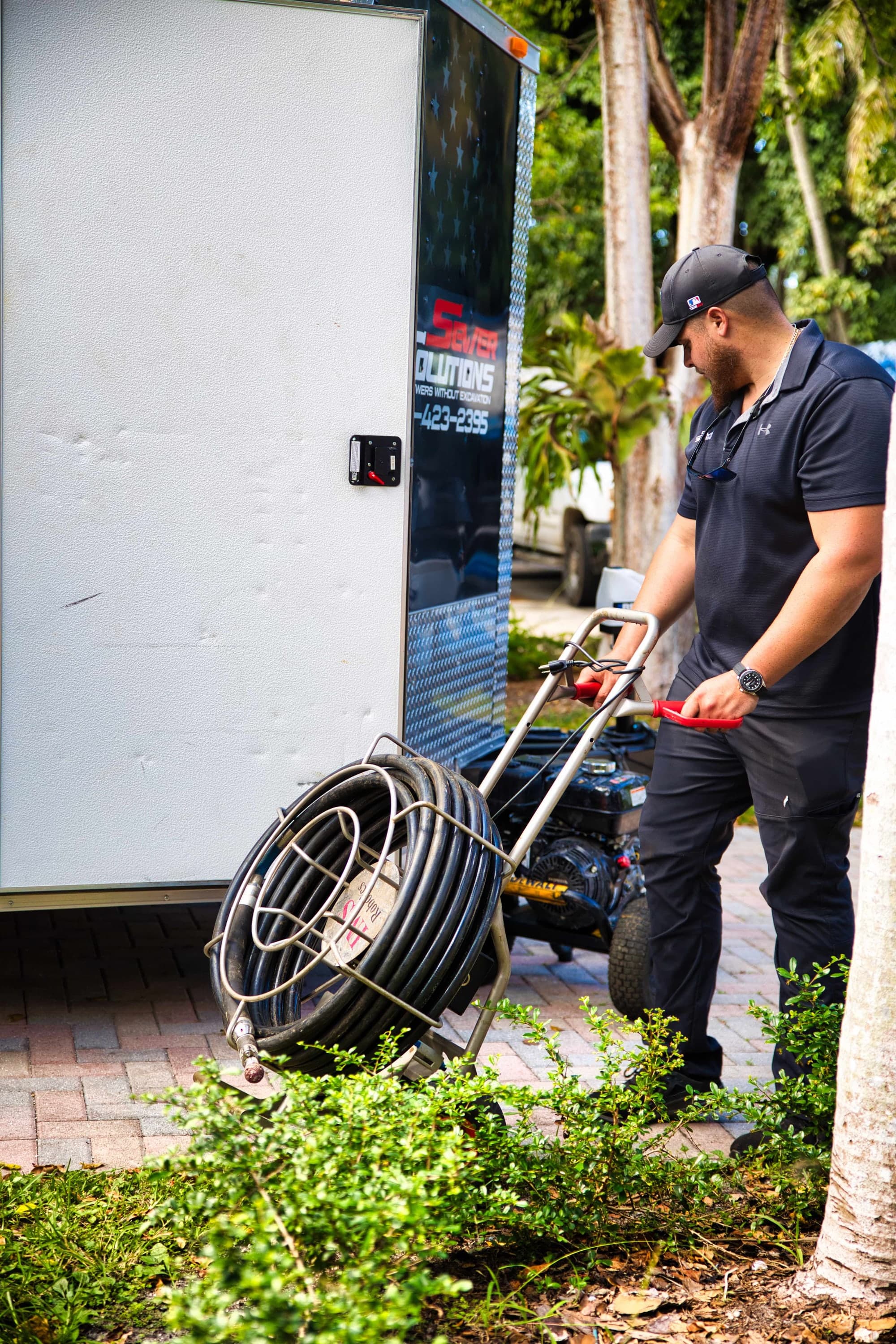
If you have been told your sewer needs lining or replacement, the condition of your line should support that recommendation. We run our CCTV camera through the accessible pipe, record the run, and walk you through what it shows and what it cannot.
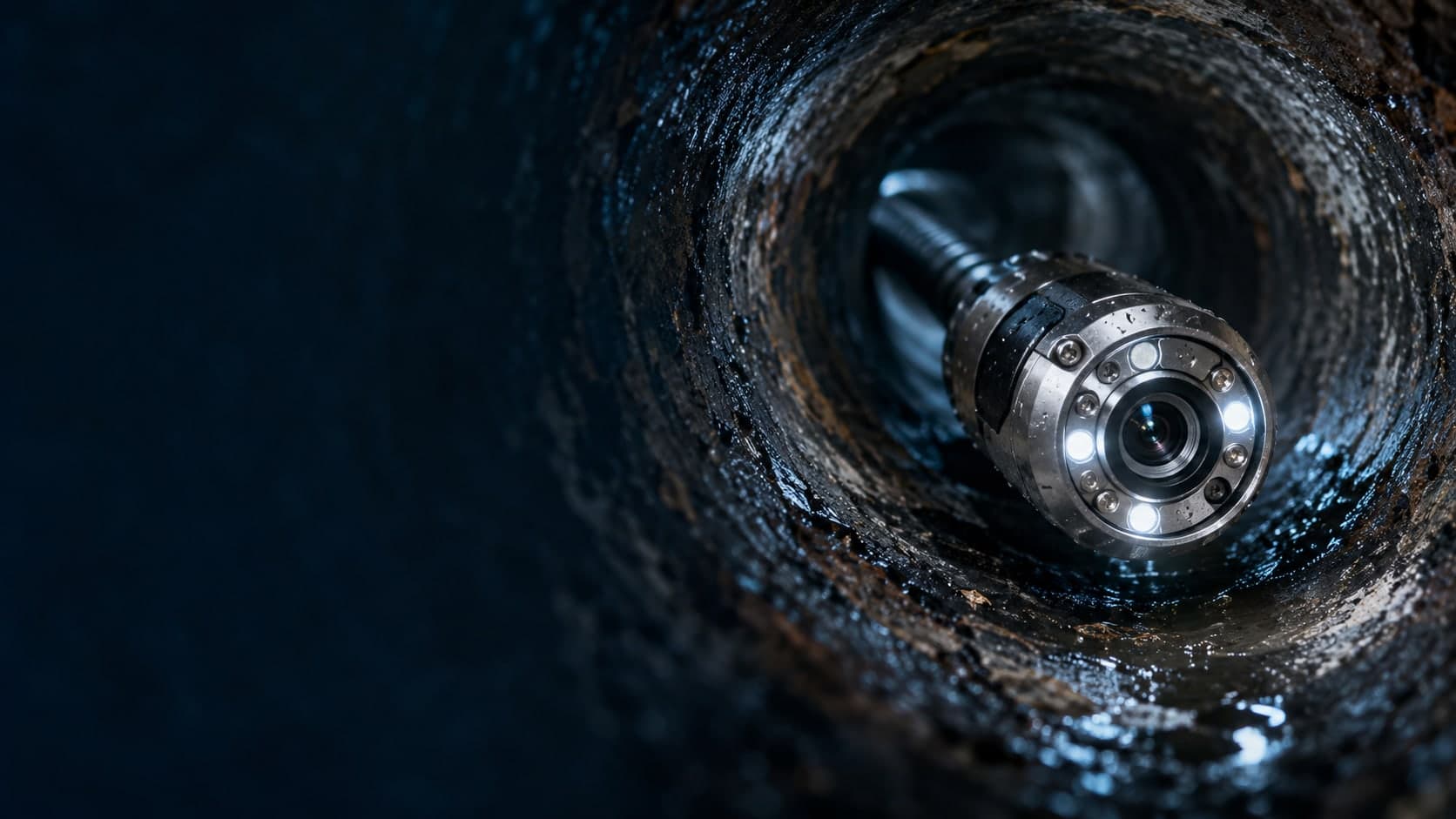 Camera inspection
When an inspection is worth it
Slow drains, odors and backups can come from very different problems. Our camera inspection replaces the guess with footage of your line, and your quote that follows is based on what the video shows.
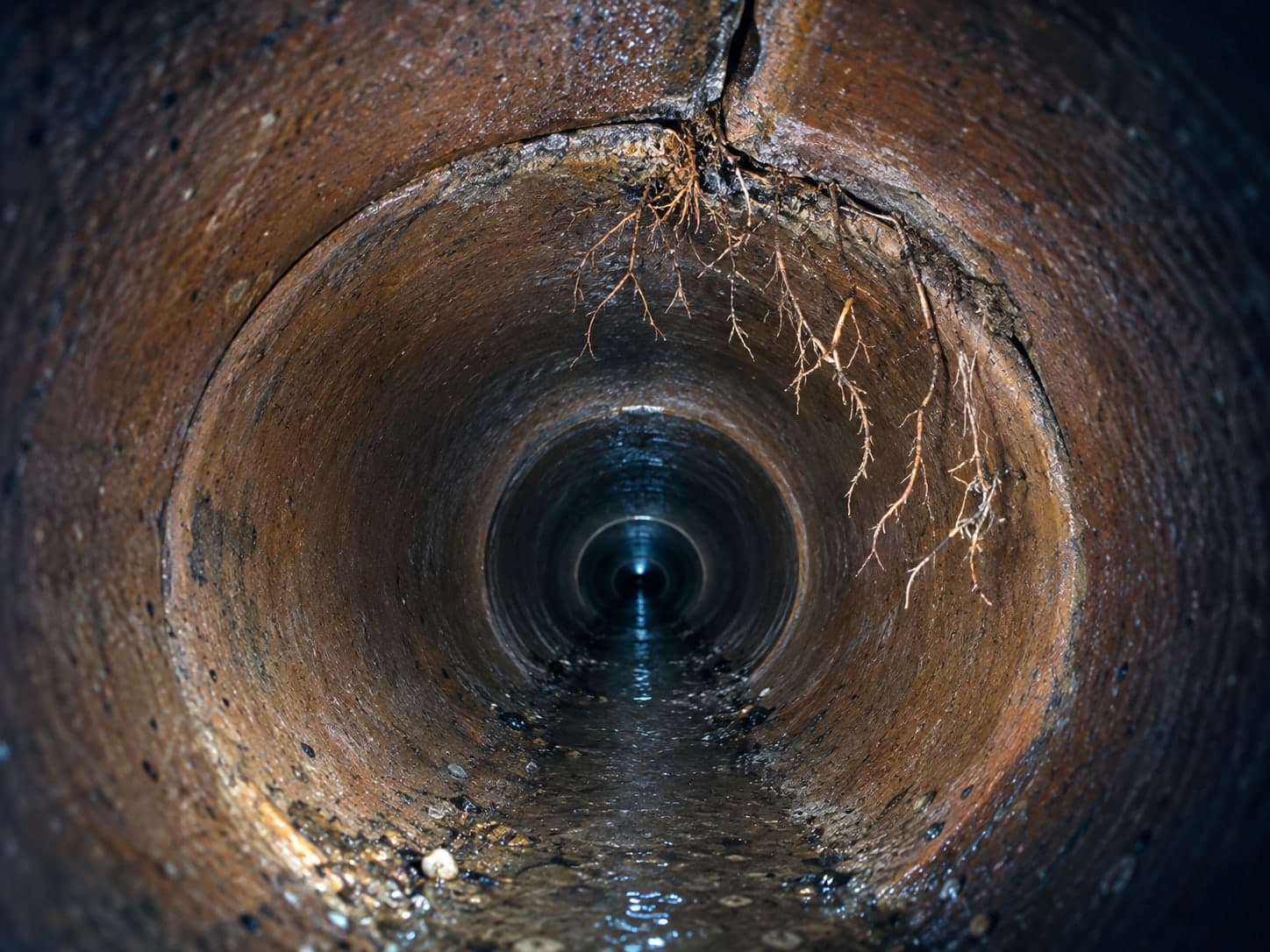 Root intrusion
This rendering illustrates root entry through an opening in a pipe. Your camera findings establish the location and condition in your own line.
Tell us which fixtures back up and what earlier clearing involved. We inspect accessible pipe for restrictions and visible defects, and identify any limits to the view.
An odor can have sources beyond a damaged sewer. Tell us where you notice it so we can determine whether a camera inspection is the appropriate investigation.
An inspection can give you information about accessible drainage before a purchase. Confirm the line coverage and records needed for your decision.
Before you agree to open your floor, see whether your pipe still holds its shape. We can line many lines instead.
We find a failing line before it is buried under your new tile and cabinets.
How the inspection works
Step 1 of 4
An accessible cleanout may provide an entry point. If another access method or opening is needed, we explain that work before proceeding. You do not need to locate a cleanout before contacting us.
Step 2 of 4
We view the pipe as far as the equipment and conditions allow, noting visible restrictions and defects. A blockage, submerged section or tight fitting may prevent a complete view.
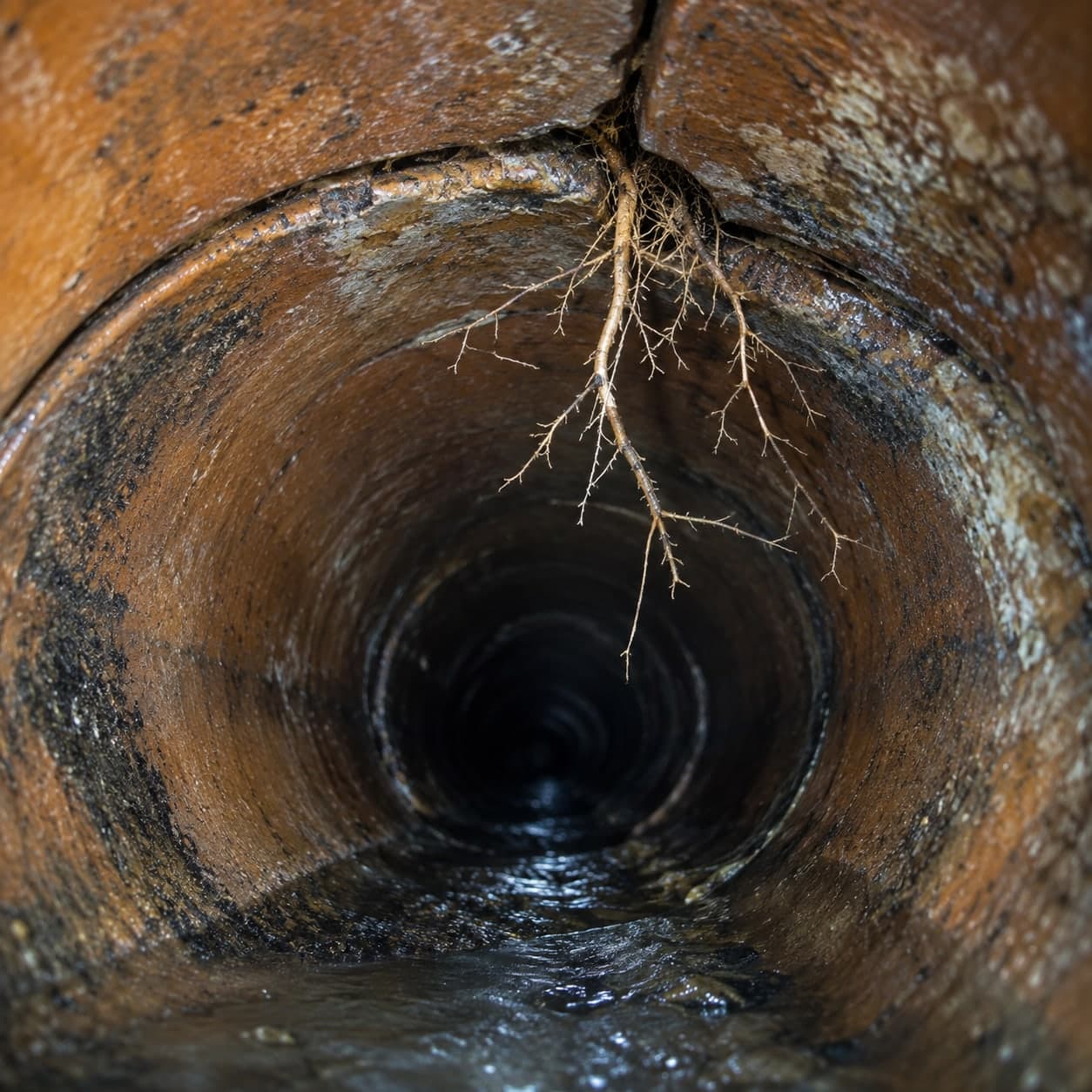 Joint inspection
Step 3 of 4
Locating can help relate a camera finding to a position at the property. Tell us if surface marks or locating information are needed so we can confirm that scope.

Step 4 of 4
We explain the visible findings and any areas we could not assess. Confirm the recording and written information you need before the visit, including any applicable charge.

From our field footage
This Aqua Pro footage shows an inspection through an existing floor opening. Your cleanout, fixtures and pipe layout determine where we can enter your line. Tell us about earlier inspections or openings so we can plan the visit.
Our technician feeds the camera through the opening and checks the monitor. This short clip has no audio.
What the camera finds
Our inspection does not make every line suitable for lining. It tells us which preparation or repair your pipe needs next.
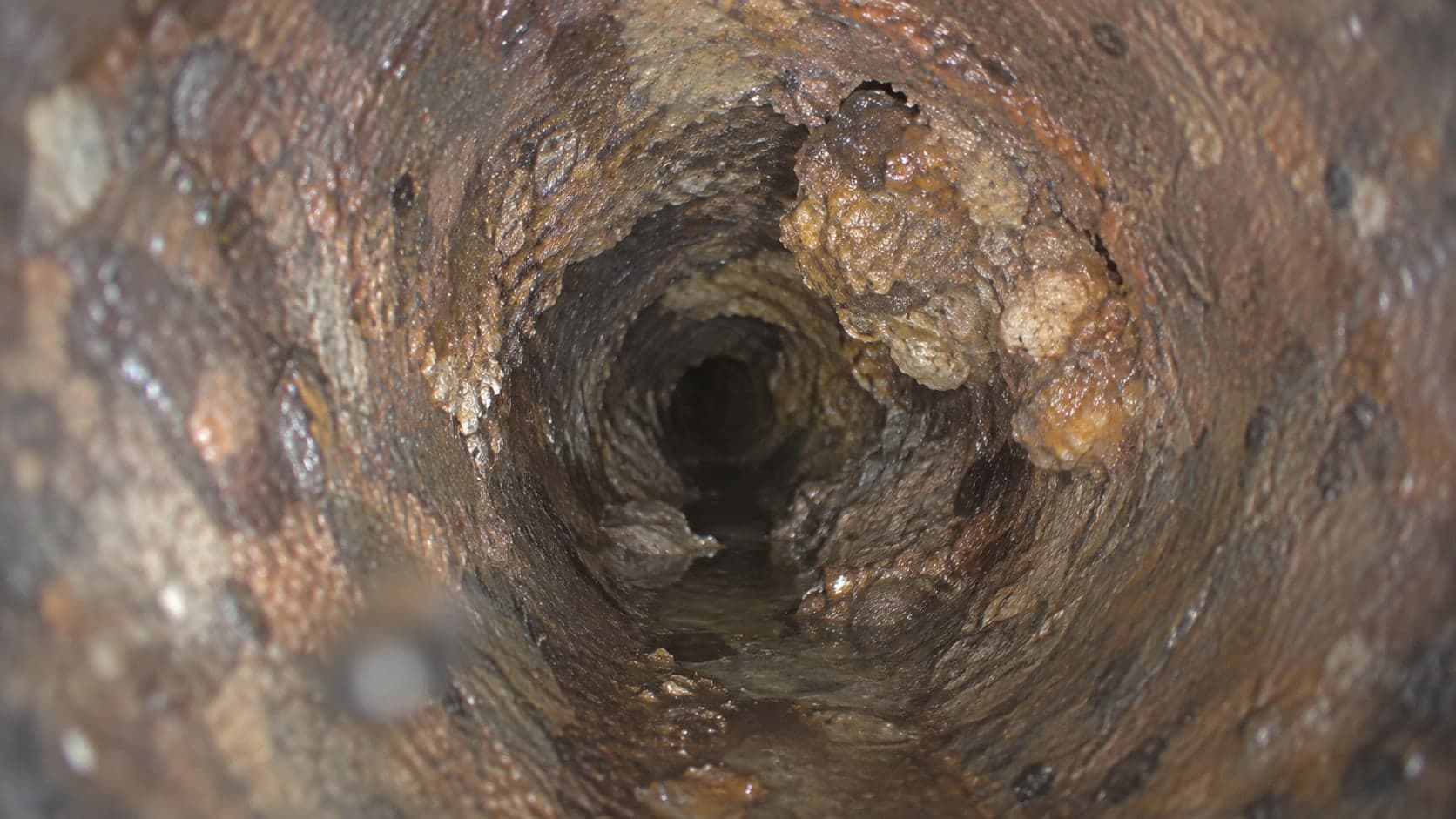 Scale buildup
Your pipe wall has narrowed with rust. We clean and descale the line, then take a second look at the wall underneath.
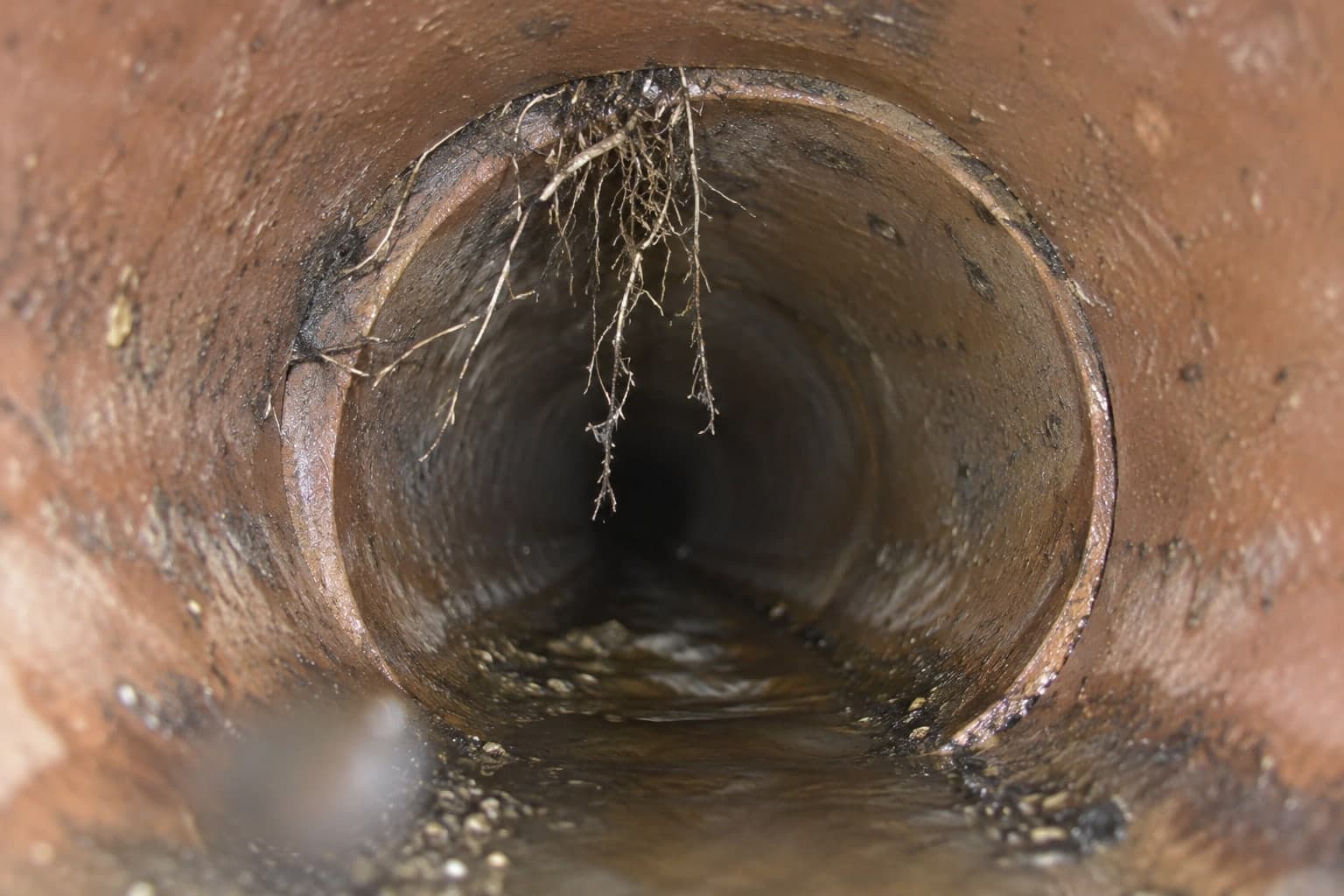 Root intrusion
We assess the restriction and the opening where roots entered. Cleaning and repairing that opening are different decisions; lining is one option when the pipe suits it.
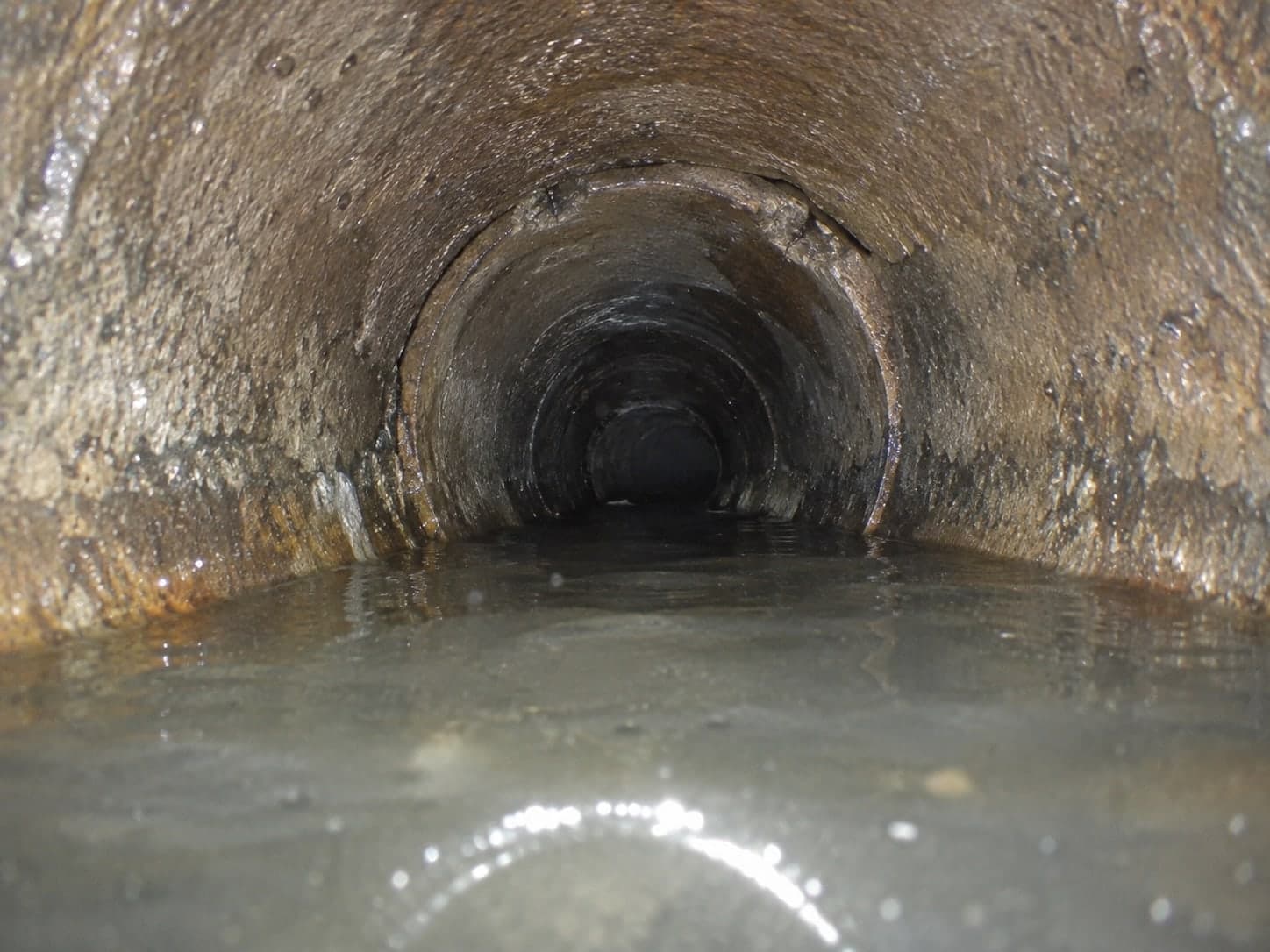 Belly in the line
A sagging section collects solids. Lining will not lift it, so we may need to re-bed that section from above.
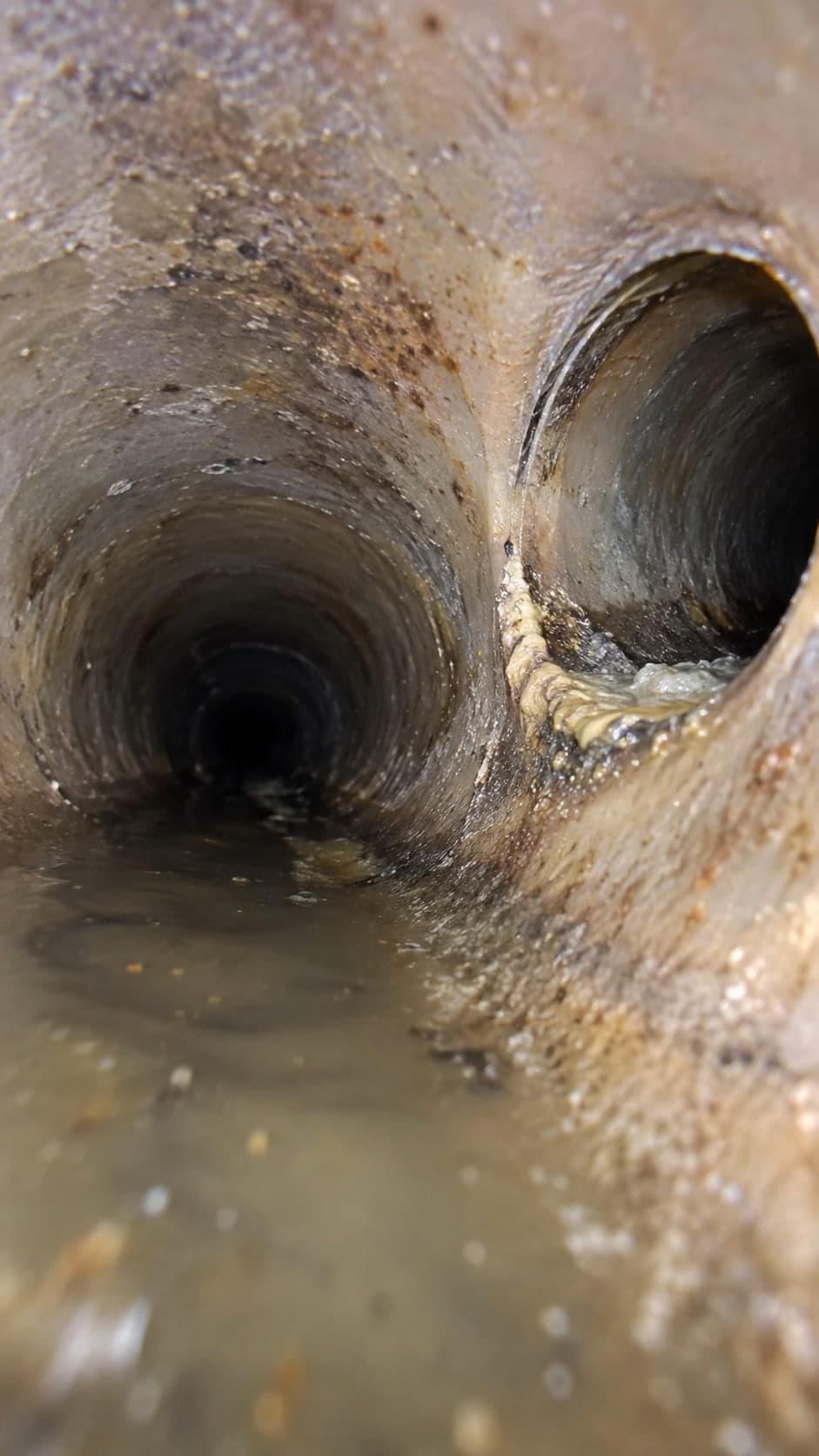 Deposits at a branch
Grease or debris at a connection usually clears when we jet your line. We check the branch itself on camera afterward.
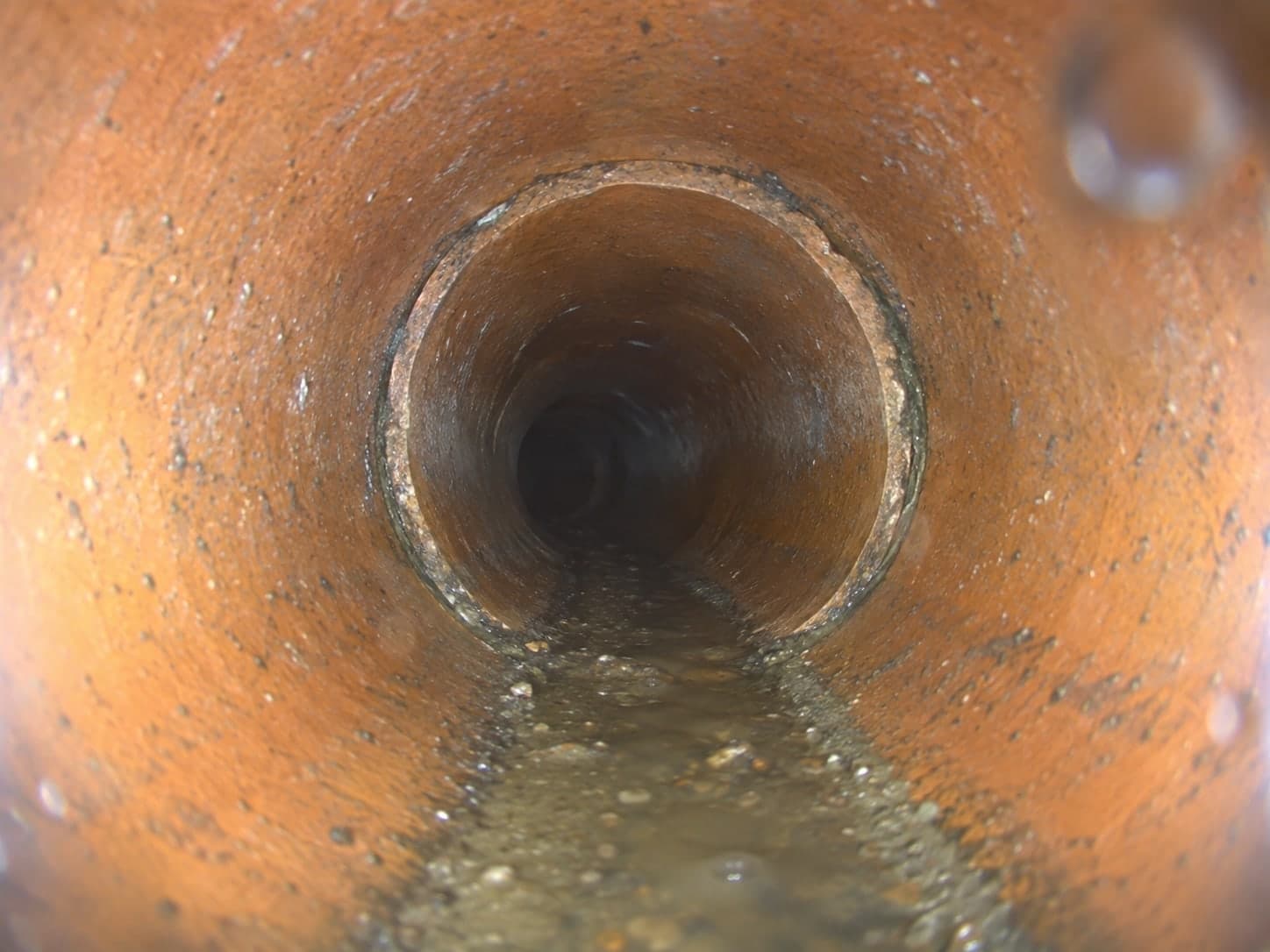 Camera view of a clay joint
Droplets and deposits can obscure your pipe on camera. We account for those limits when reading your inspection video.
What the camera cannot show
Debris, a full blockage or standing water can stop our camera or cover the pipe wall. When that happens we tell you what we reached, what we could see and what we could not assess, instead of guessing at the rest.
Sewer cleaning is often the step that makes a useful inspection possible. Clearing your line first lets our camera read the wall, the joints and the slope.
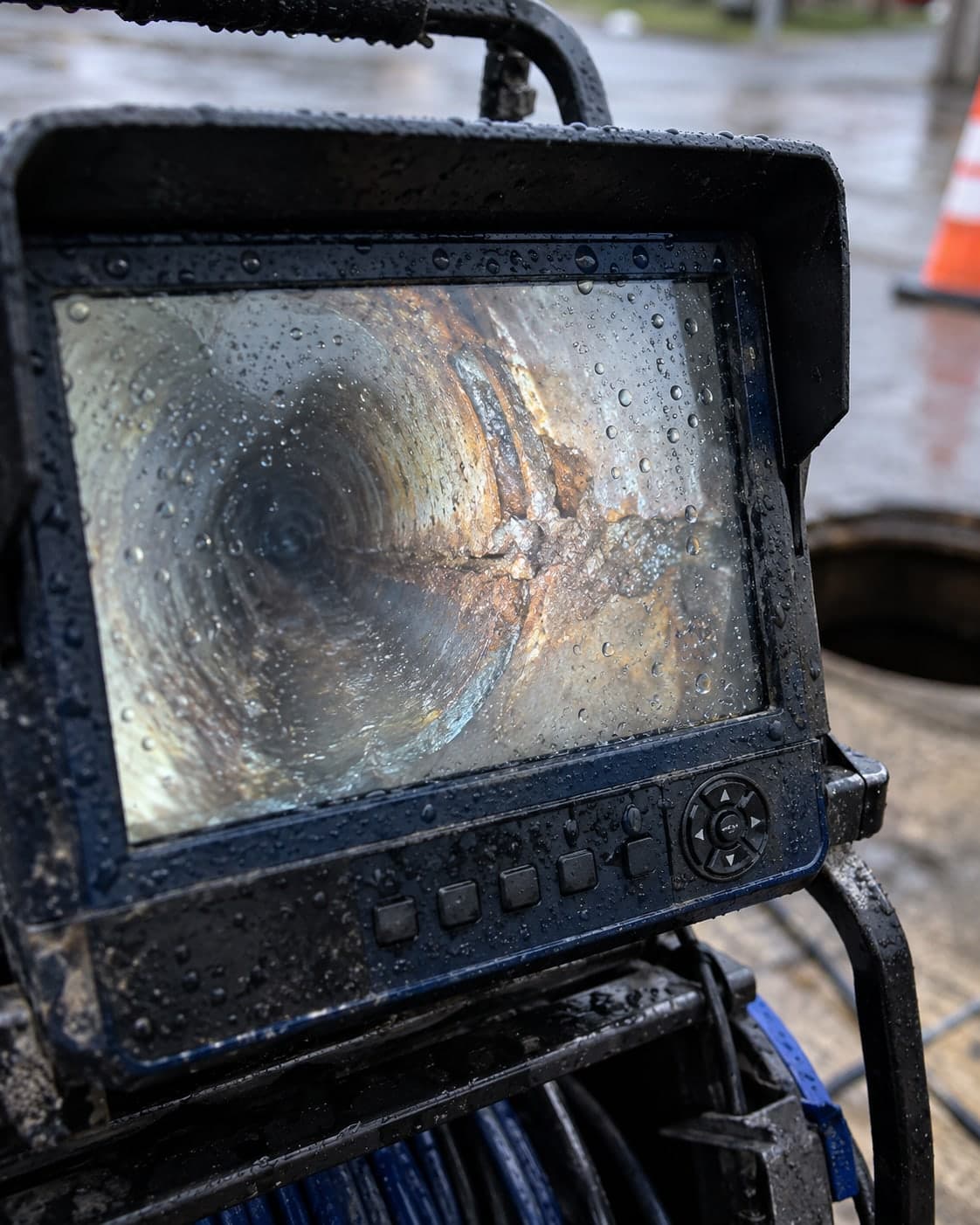 Inspection screen
What you receive
A recurring backup, a planned repair and a property purchase call for different information. If you need the recording, written findings or locating marks, tell us before the visit so our inspection covers it.
For repair planning, our written findings name the section we reached, what we could see and what we could not assess. That gives your next decision, and our next quote, a clear starting point.
Our inspection crew
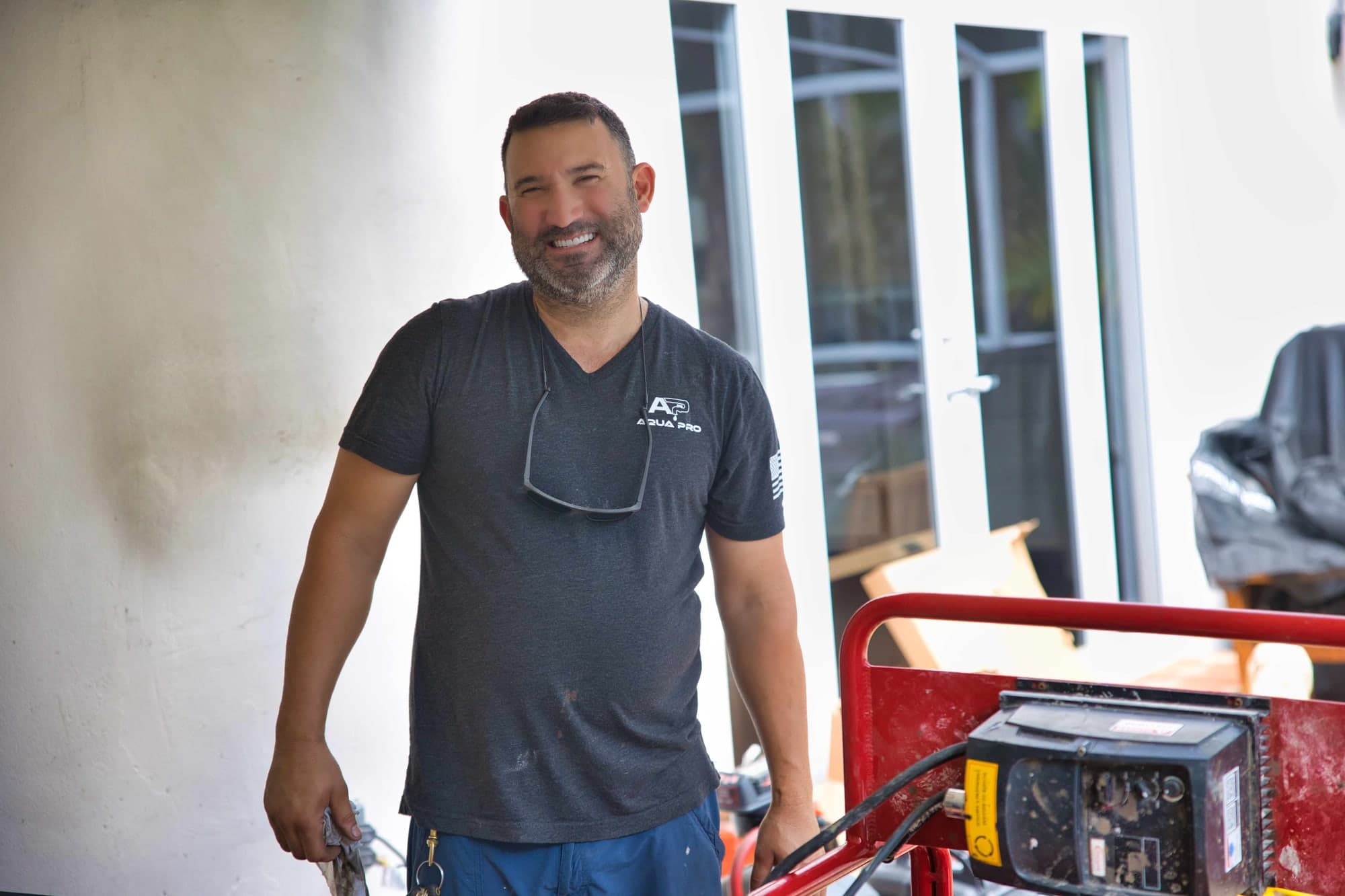

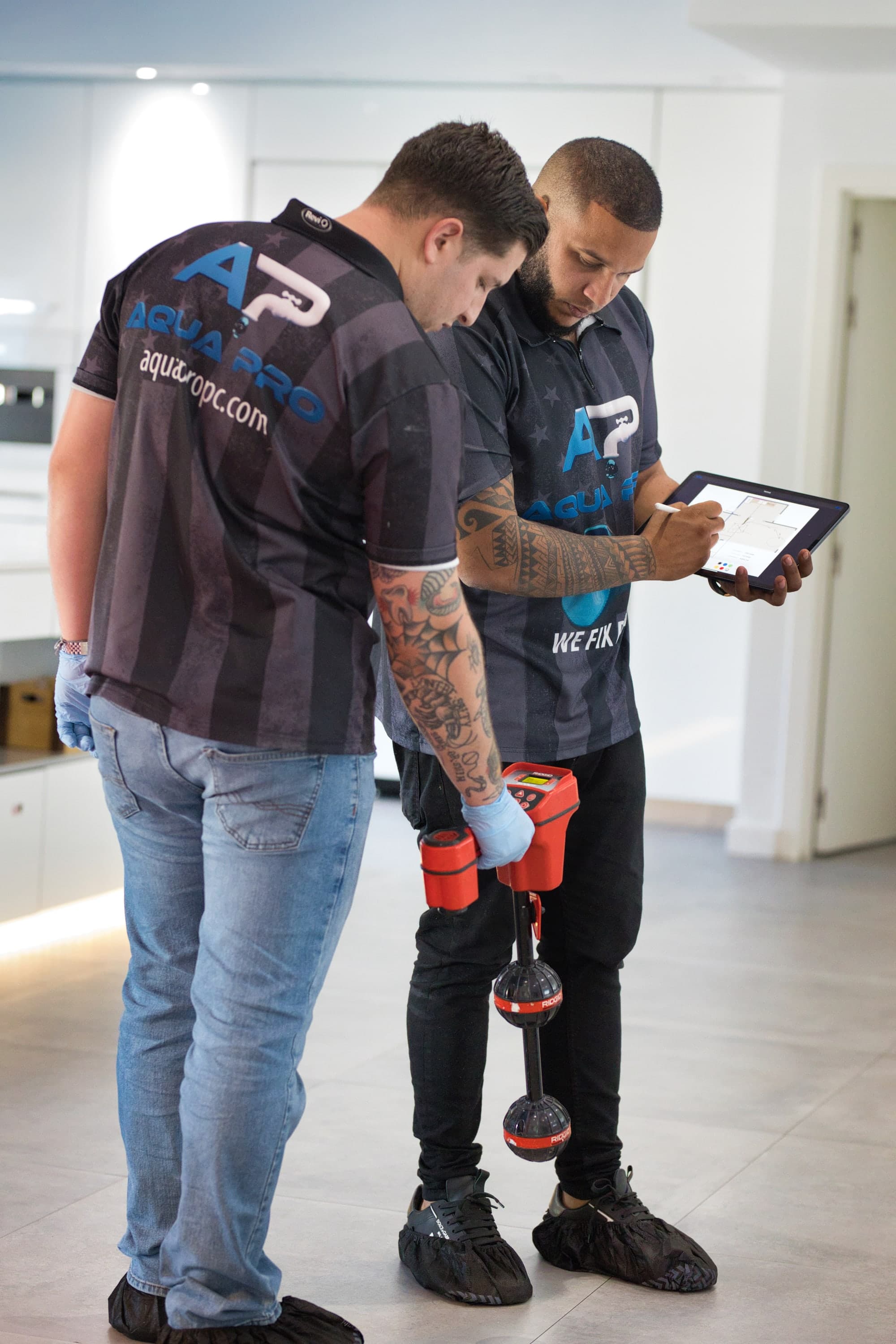
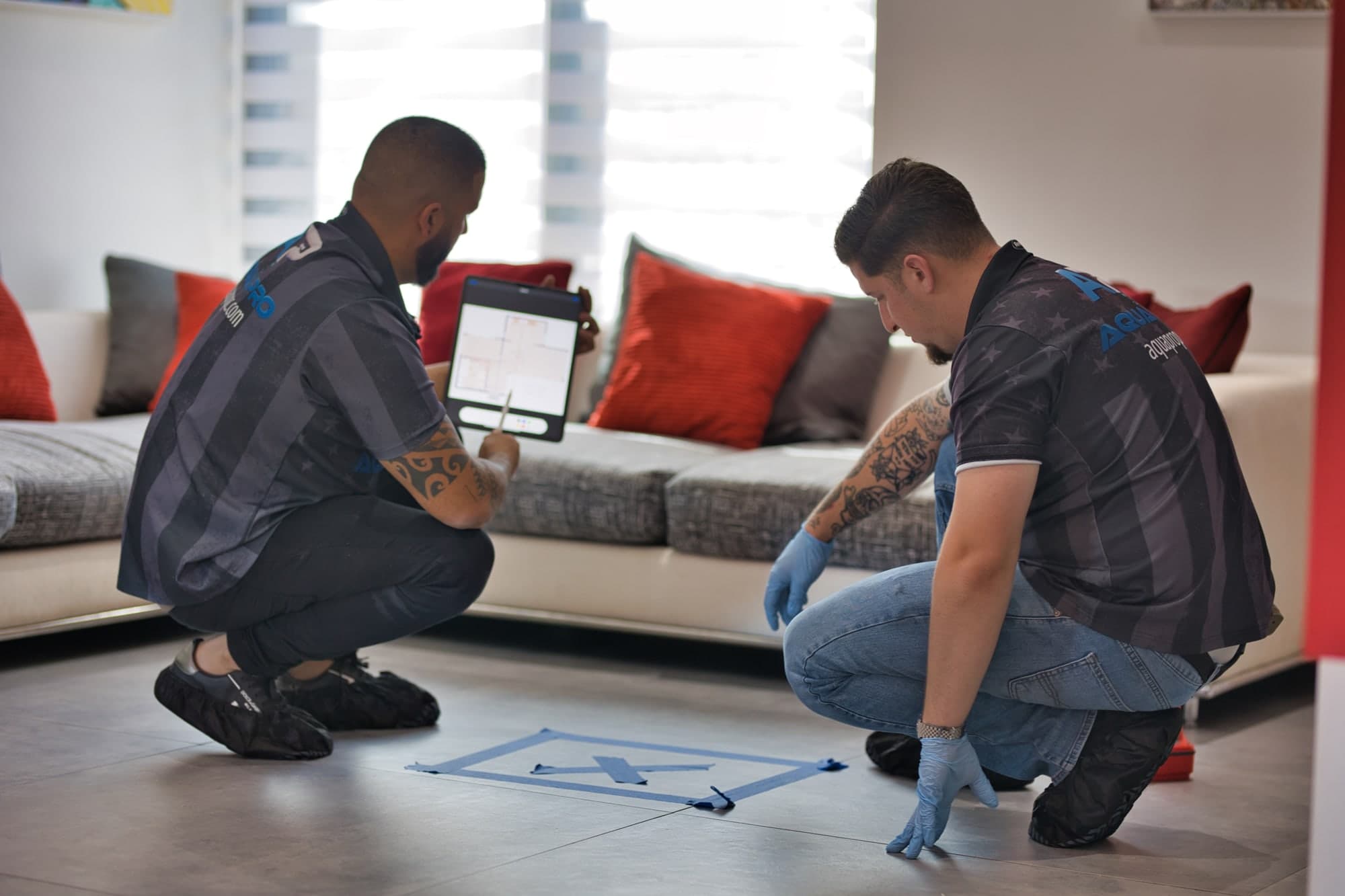
These are photographs of our technicians and equipment on the job.
Common questions
A blockage may stop the camera or hide the pipe wall. We explain the limit and whether cleaning or another access point is needed before continuing.
Tell us the records you need when booking. We confirm the recording, written findings, locating and any separate charges for your inspection scope.
No. It provides visual information about the sections reached and visible. We identify inaccessible or obscured areas rather than treating an incomplete view as a complete assessment.
Where we work
We inspect sewer lines across Miami-Dade and Broward. Send your name and phone number, and add your property location or any earlier findings if you have them.
We offer sewer camera inspections in Miami, Coral Gables, Coconut Grove, Cutler Bay, Doral and Miami Shores, and throughout Miami-Dade and Broward, including Fort Lauderdale.
We install a cured-in-place liner inside suitable existing pipe, with access and connections planned for your line.
We use water cleaning for suitable deposits and assess whether your pipe needs further preparation or repair.
We assess your cast iron drains and explain cleaning, lining or replacement.
Ask about current inspection eligibility and included work.
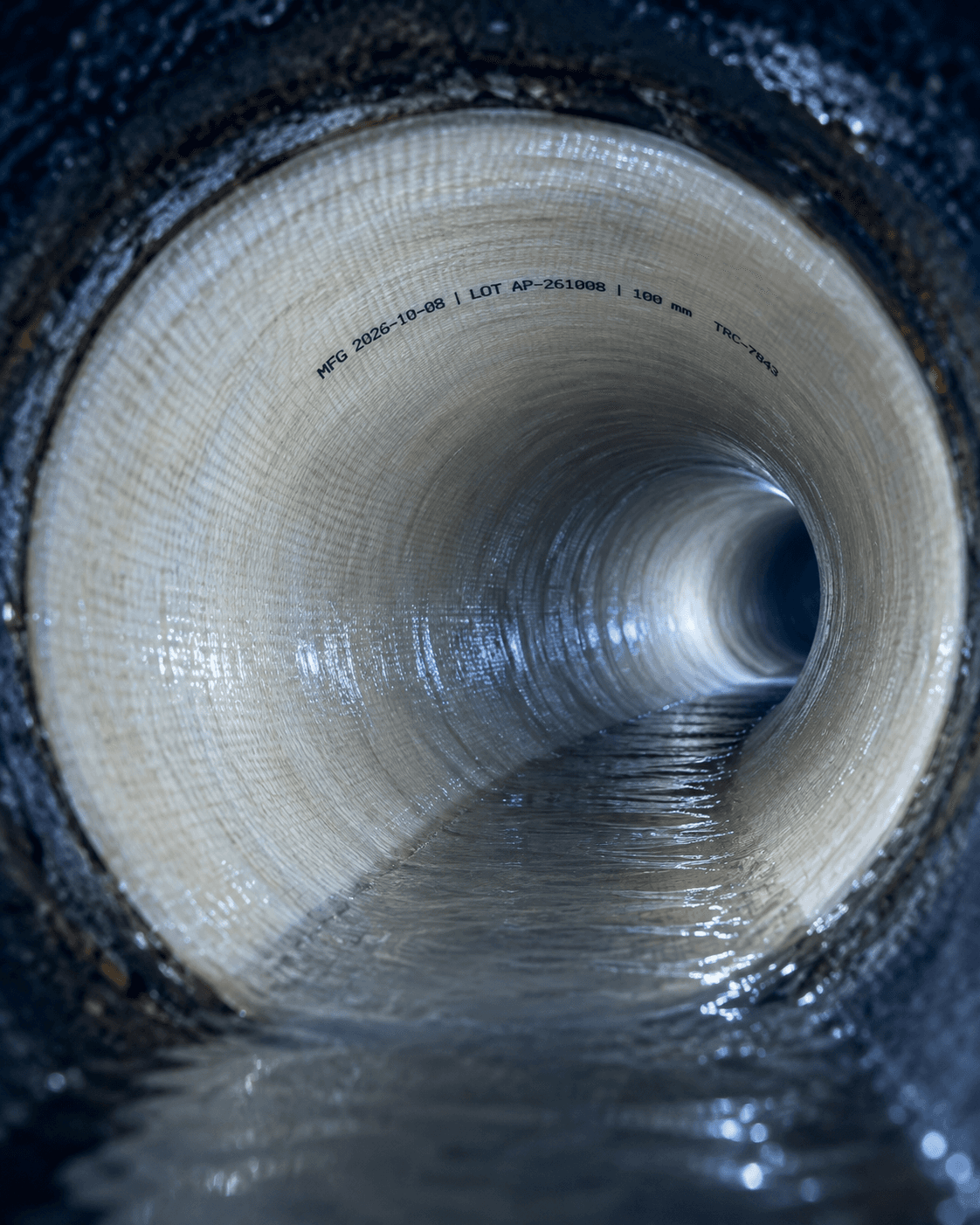
Talk to a licensed plumber
Describe the problem and we will tell you whether it needs a camera inspection, a cleaning or a repair. We explain our proposed work and price before you approve it, and financing is available on every repair we do.
You approve your price in writing before we begin your repair. Here is what affects it: