Skip to content
All services

Cast Iron Pipe Repair We assess your cast iron drains before we plan any work beneath your floor.

Recurring backups in an older drain raise a hard question: does your line need cleaning, a repair inside the pipe, or access through the floor? We put our camera in your line, show you its condition and explain the choices, instead of treating the age of your pipe as a diagnosis.

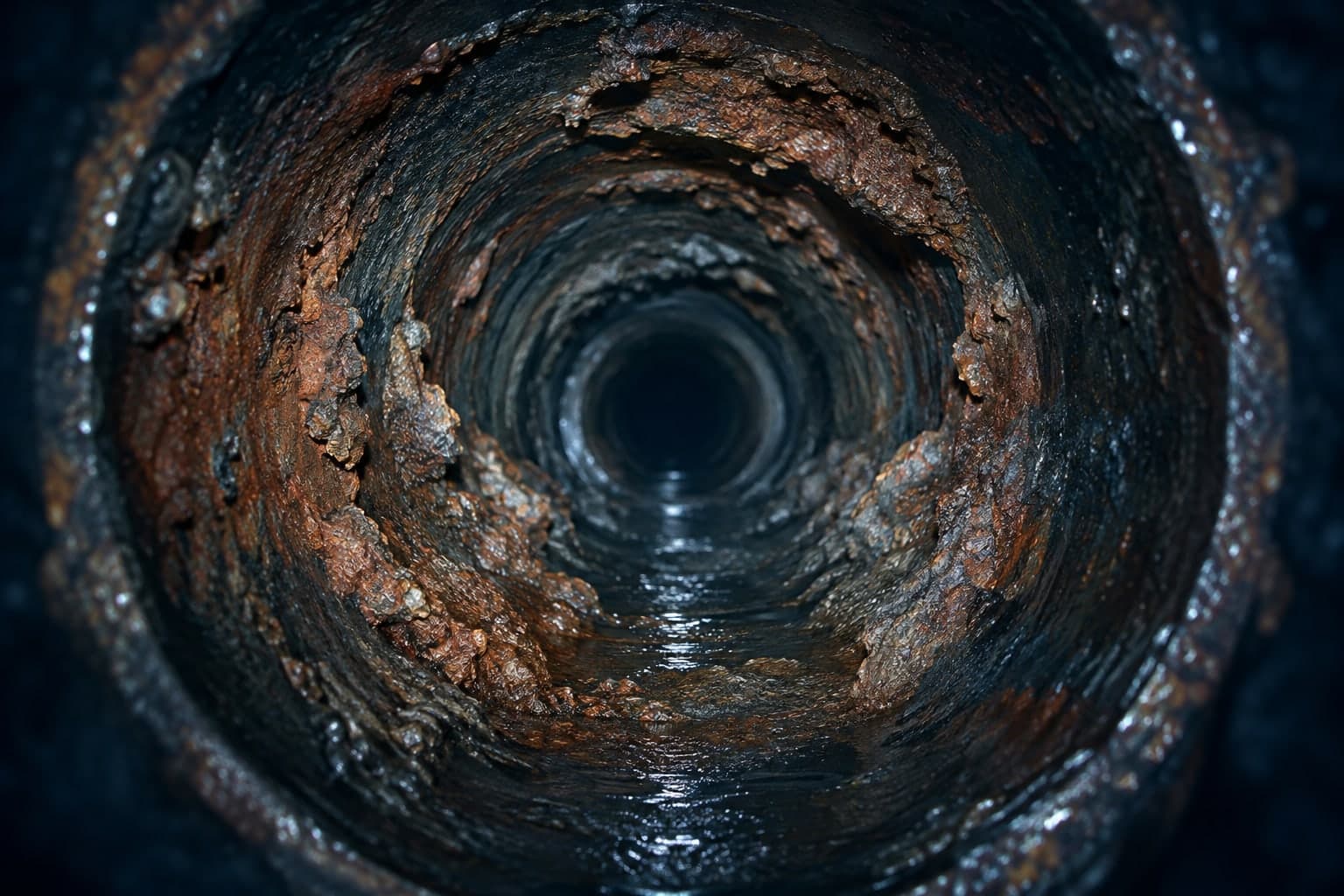
Illustration: the inside of a corroded cast iron sewer pipe with rust scale and pitting along the bottomCorroded cast iron

Why cast iron fails here

Old cast iron rusts from the inside out.

Cast iron drains can develop scale and deterioration, but age alone does not establish the condition of your line. We investigate the symptoms and inspect the accessible pipe before recommending work.

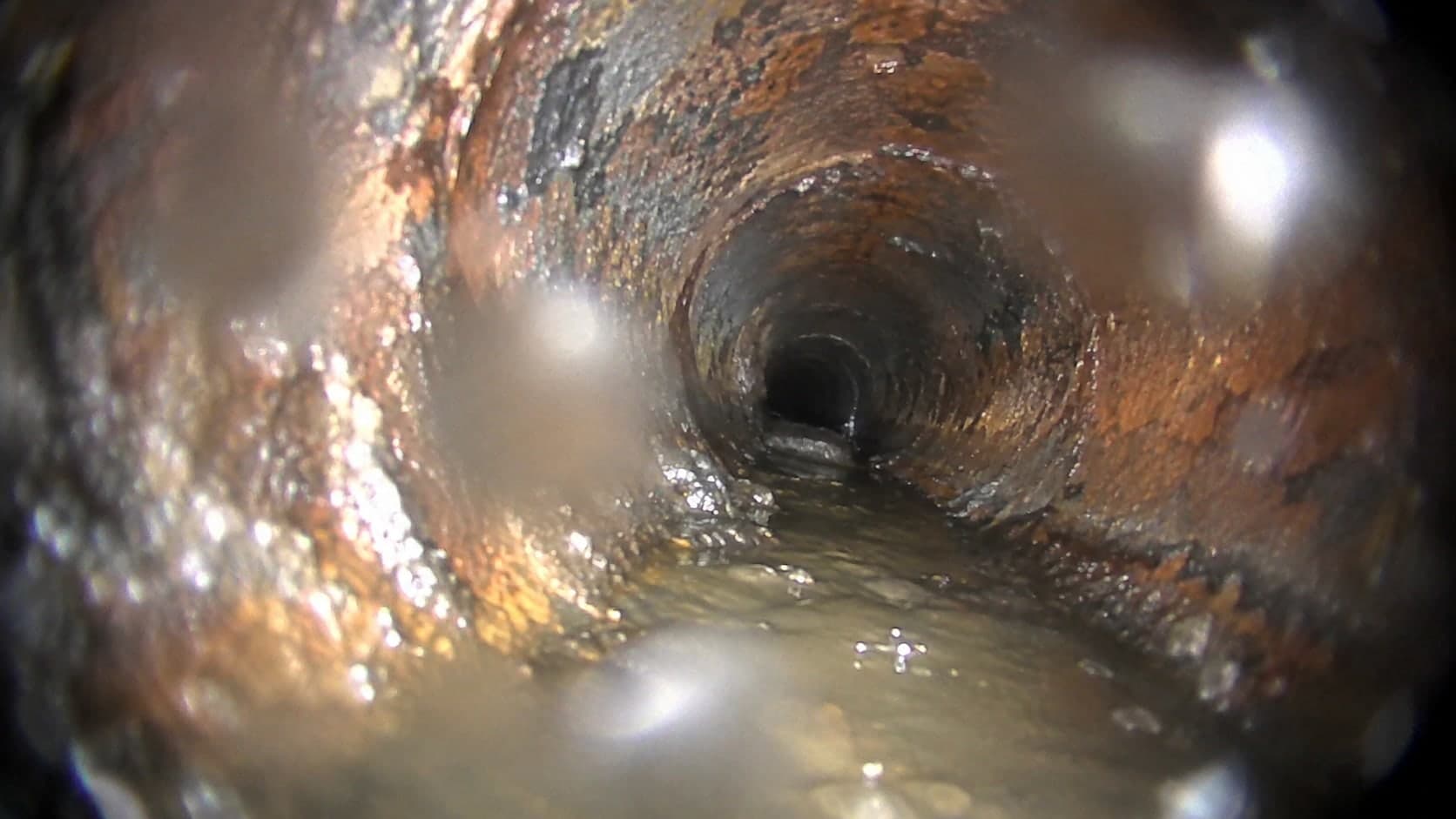
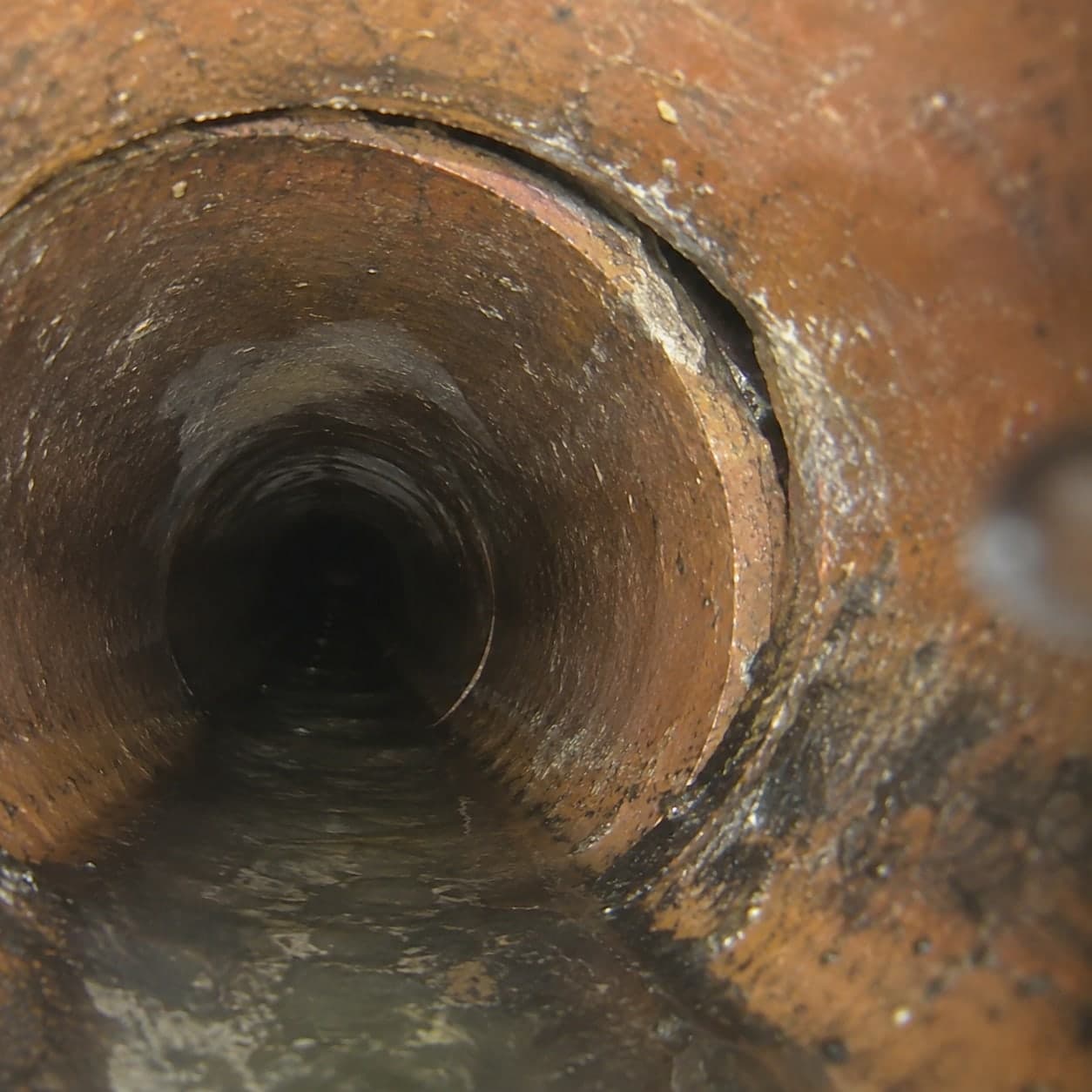
Illustration: camera footage inside a corroded cast iron sewer line with water droplets on the lensCamera view of cast iron

Corrosion and deposits build up inside cast iron. We inspect your pipe after cleaning to assess its wall and decide whether lining is suitable.

  1. 01

    Your drain blocks again after clearing.

    Tell us what was cleared, how long it helped and whether the problem affects other fixtures. We check for remaining deposits and visible pipe damage.

  2. 02

    You notice odors around your plumbing.

    An odor has several possible sources. We check the reported area and your drainage rather than assuming cast iron beneath your floor is responsible.

  3. 03

    Several fixtures are draining slowly.

    A shared restriction may be involved. We identify the affected connections and inspect where access allows.

  4. 04

    Your previous inspection showed damage.

    Share the recording or report if you have it. We check which section it covers and whether the condition or symptoms have changed.

  5. Describe what you are seeing
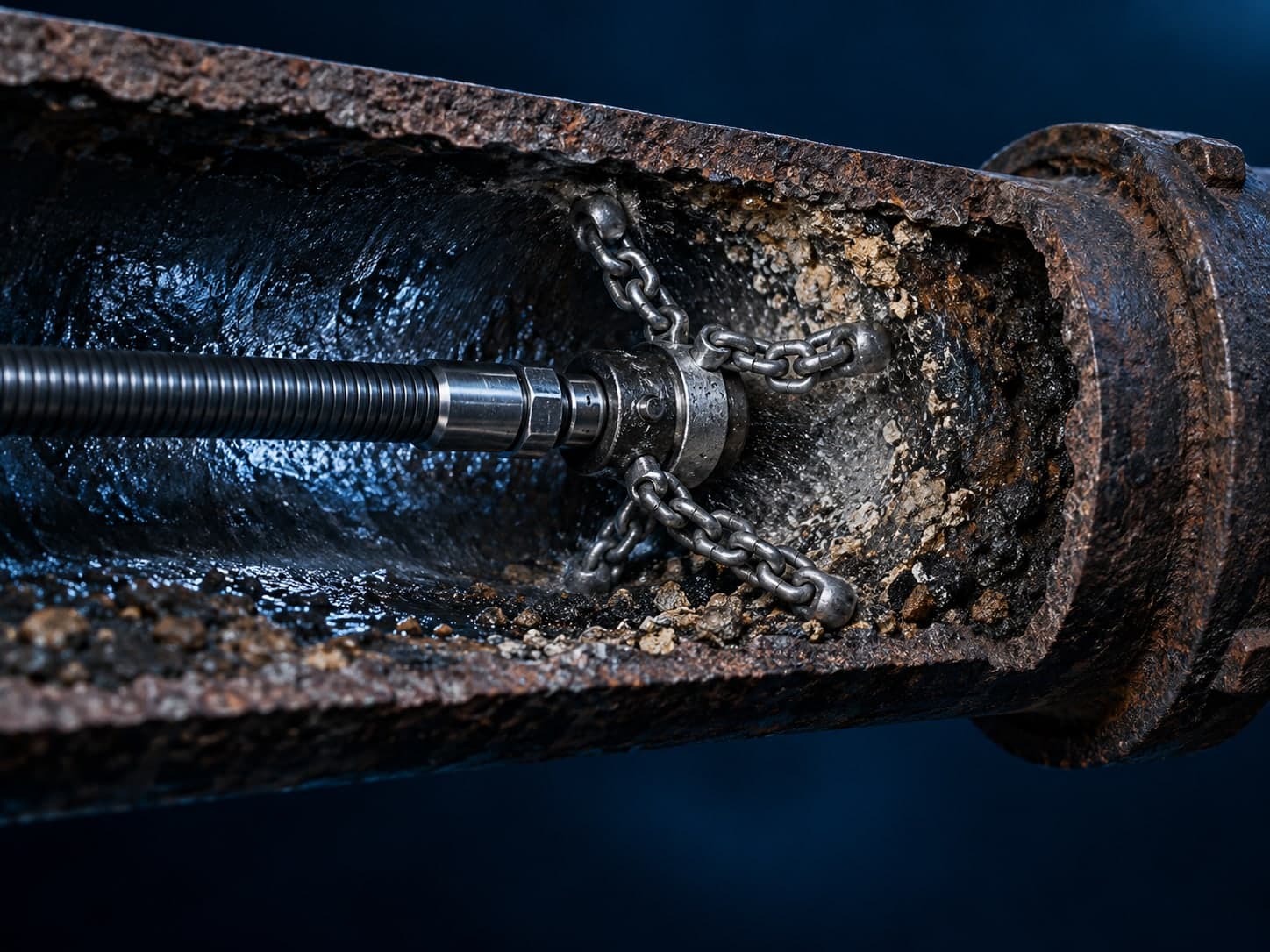
Illustration: a mechanical descaling head cutting rust scale from the wall of a cast iron pipeDescaling

Descaling exposes the real pipe wall. Our camera then reads the pitting that was hidden under the scale.

Scale versus damage

Your blockage and your pipe’s condition need separate answers.

Deposits reduce the opening inside a cast iron drain. Breaks, deterioration and displaced sections are a different problem. Our sewer camera inspection shows us which one you have, although we may need to clean and descale your line first to get a useful view.

Removing scale restores flow. It does not rebuild a damaged pipe. What we see after the cleaning decides what follows for your line: more years of service, a liner, or replacement of a section.

Inspection to decision

Three findings lead to three different repairs.

We do not recommend a method from the age of your house. Our camera decides, and you see the same footage we do.

  1. Step 1 of 3

    Scale and deposits with the pipe wall intact call for cleaning.

    We remove deposits using a method suited to your line, then inspect the exposed surface. Camera footage shows visible condition; it does not measure remaining wall thickness or predict a fixed service life.

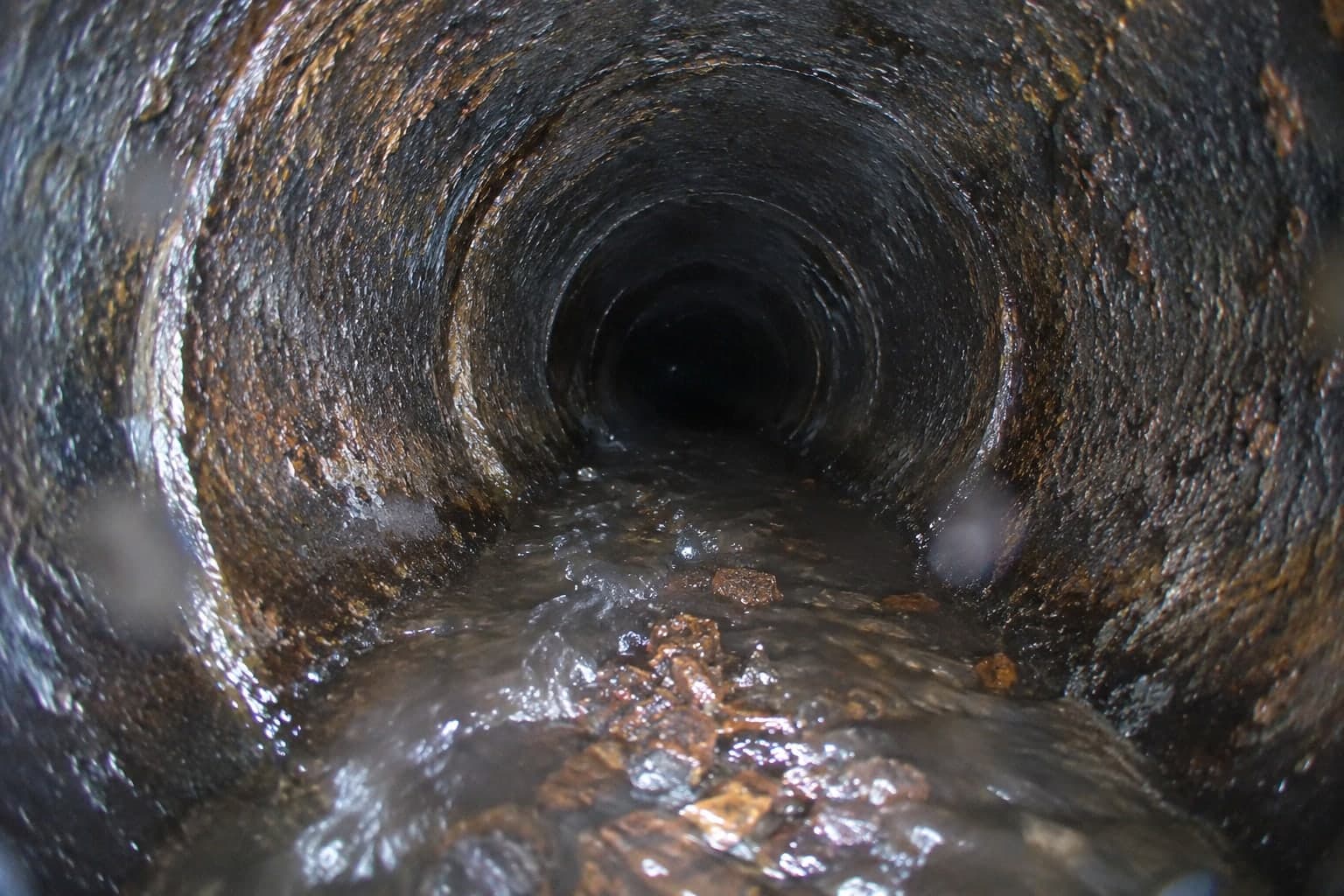
    Illustration: loosened rust scale being flushed out of a cleaned cast iron pipeFlushing loose scale
  2. Step 2 of 3

    A retained pipe route may be suitable for lining.

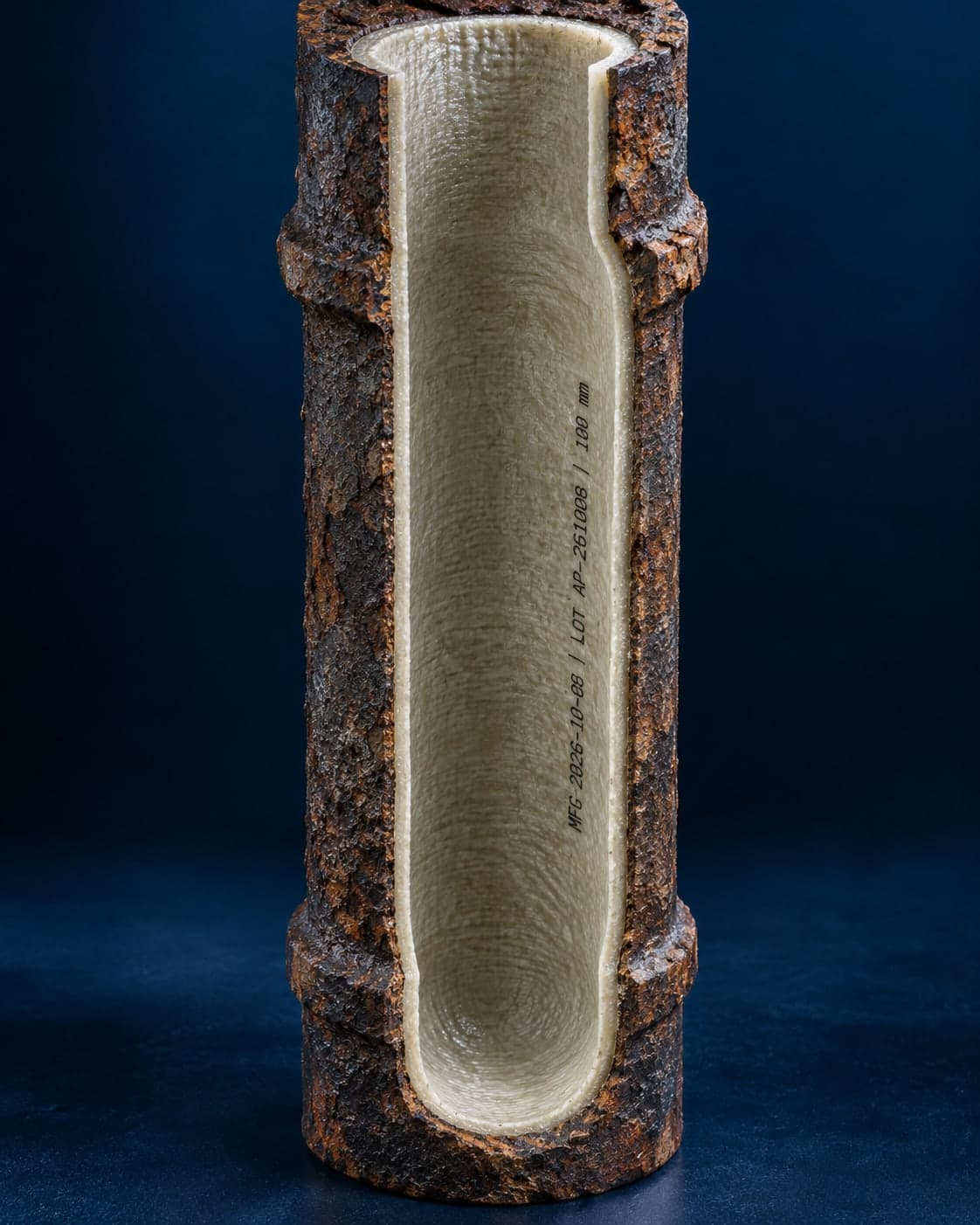
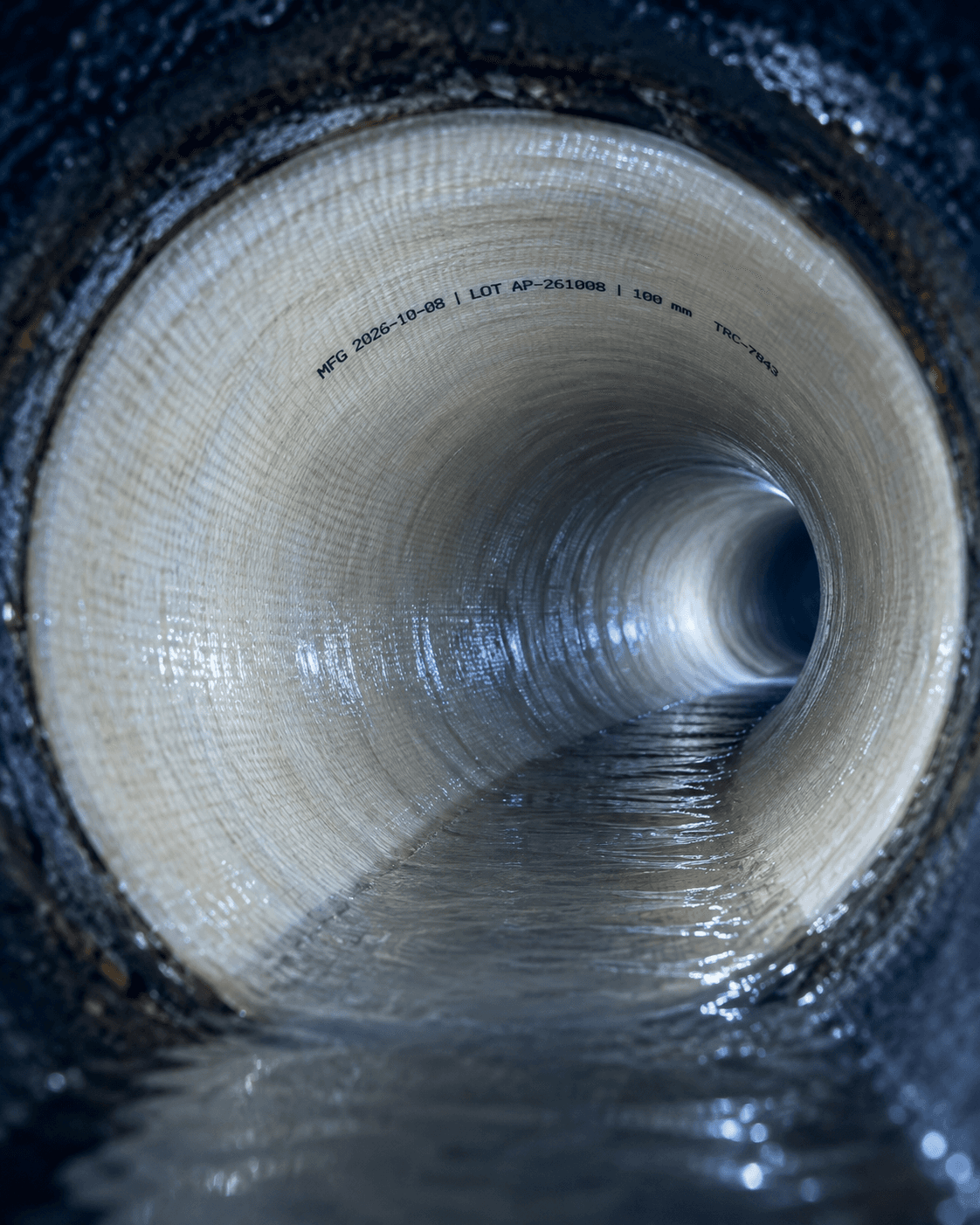
    This is the pipe trenchless lining was made for. We install a cured-in-place liner that seals the cracks, bridges channeled sections and gives you a new continuous pipe wall without opening your floor along the route.

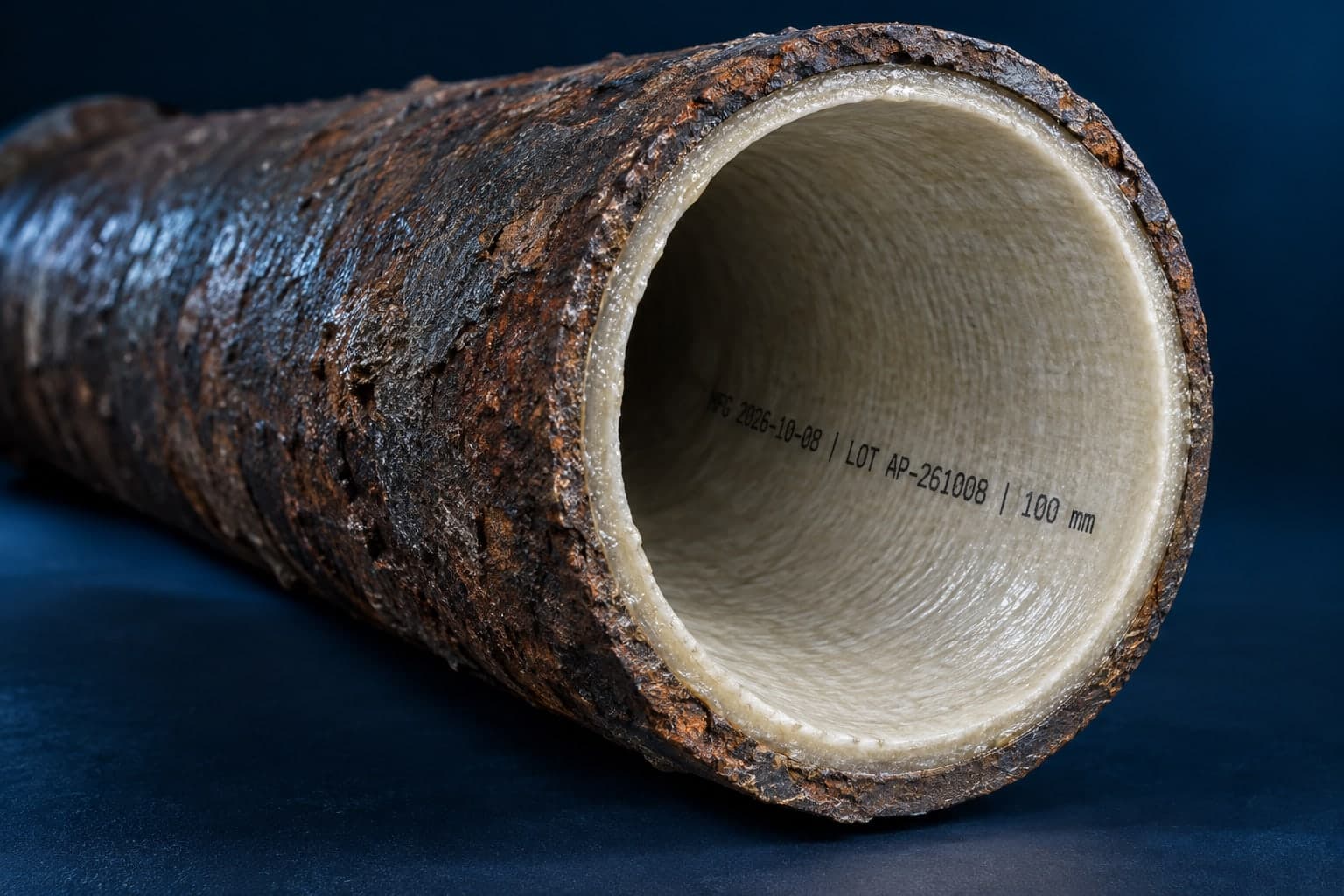
    Cutaway of a cured liner forming a new pipe inside a corroded cast iron host pipePipe within a pipe
  3. Step 3 of 3

    A collapsed, badly offset or missing section calls for replacement.

    We explain where access and replacement may be needed when the pipe path cannot support a liner. The inspection and site conditions determine the repair extent.

    Illustration: camera view of a cast iron joint that has shifted out of lineOffset joint

Cast iron, before and after

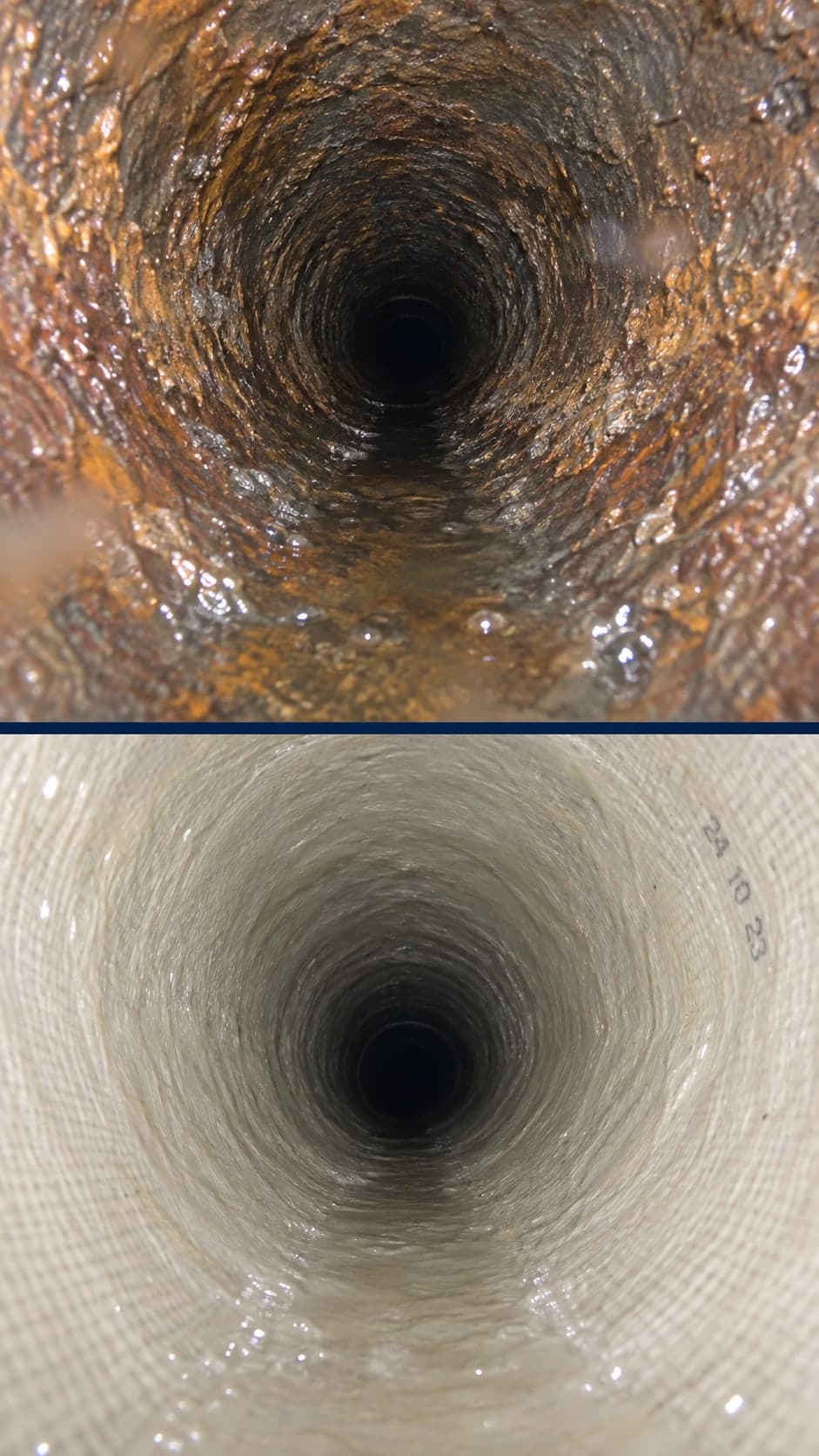
A lined cast iron drain keeps its route and loses its joints.

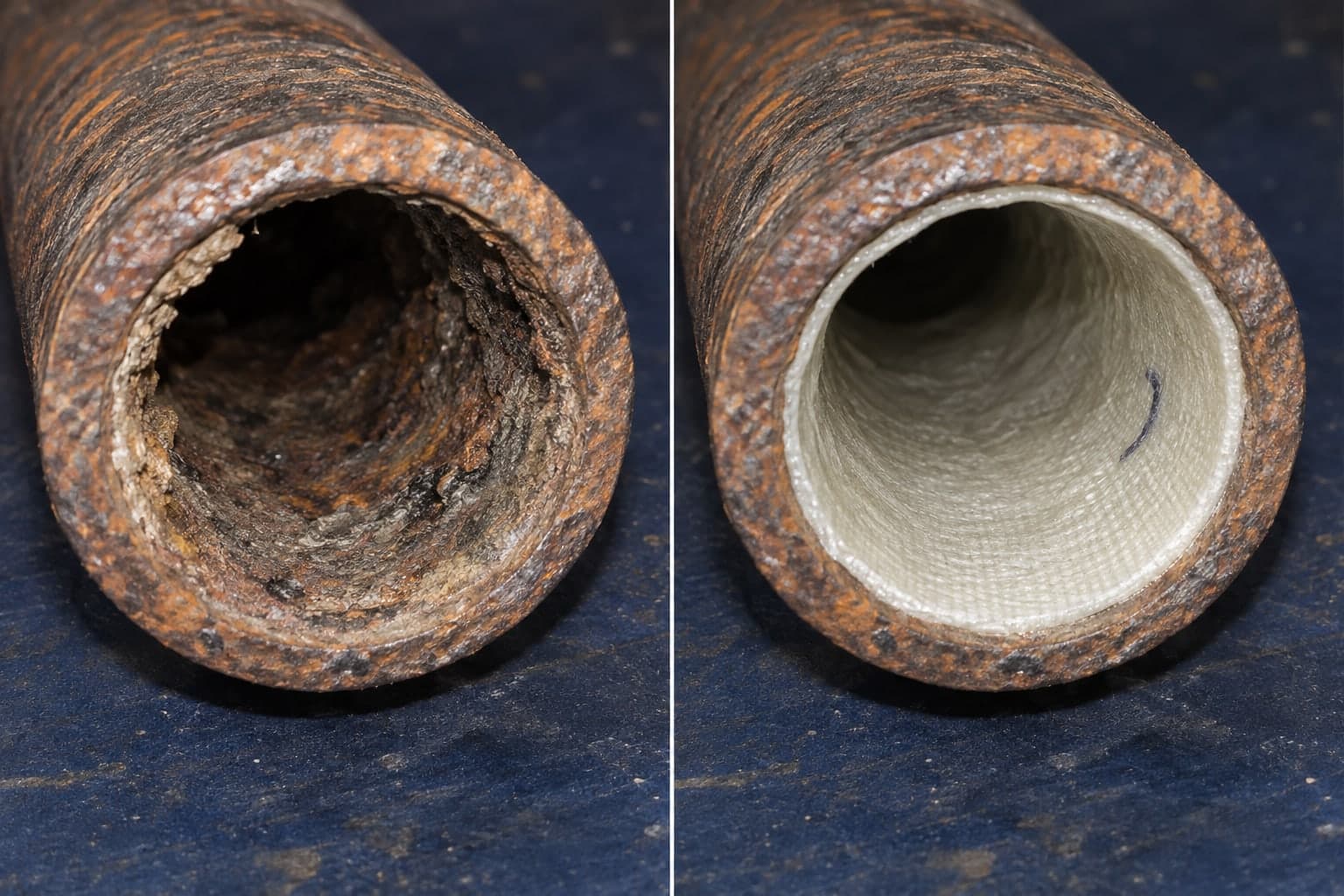
These renderings illustrate the difference between an existing pipe surface and a lined interior. Your own inspection establishes the condition and result for your repair.

  • Illustration: side by side views of a corroded cast iron pipe mouth and the same opening after liningBefore and after lining
    BeforeAfter

    The pipe mouth at your cleanout gets a smooth bore.

    The rendered comparison shows a corroded mouth and a lined bore. The liner system and preparation requirements are selected for your actual pipe.

  • Illustration: side by side views of a corroded vertical cast iron riser and the same riser after liningBefore and after lining
    BeforeAfter

    A suitable stack can be lined from planned access.

    The route, fittings and access determine whether lining can reduce opening along a stack. We identify the required access before recommending the repair.

Cutaway of a lined cast iron riser and drain beneath a bathroom floorRiser lining

Under the slab

An under-slab repair needs our clear access and restoration plan.

The location of the damaged section and the openings available to reach it decide where we work. An under-slab pipe does not automatically mean your whole floor comes up, and we do not promise your floor stays untouched either. Our work plan for your line says exactly which openings we need, if any.

For lining at your home, our written scope names the drains involved and the plumbing you will not be able to use while the liner cures. It also states the access and restoration work we include, how we reopen your connected branches and how we verify the repair on camera.

Inside the house

We plan the access needed to reach your pipe.

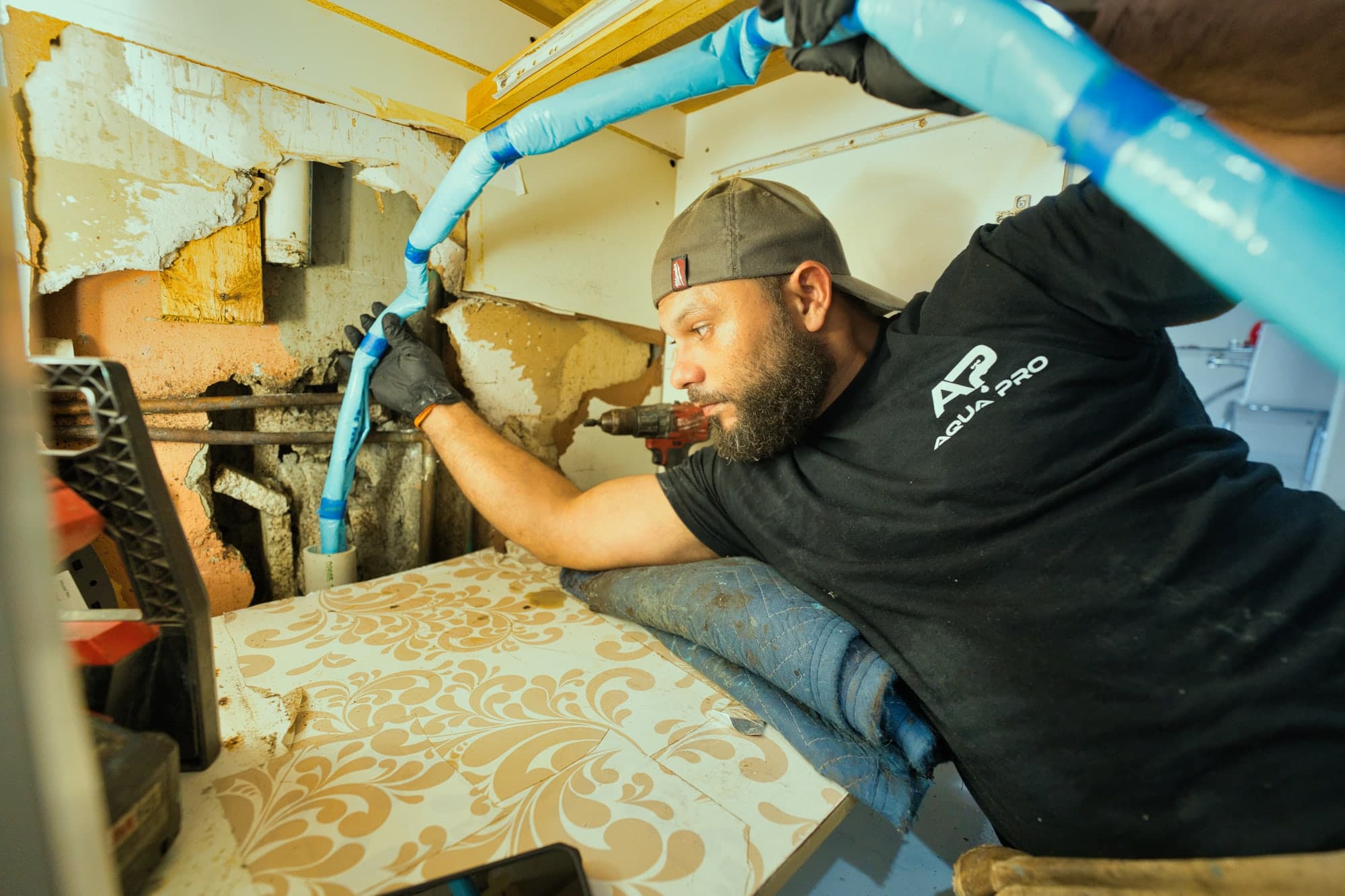
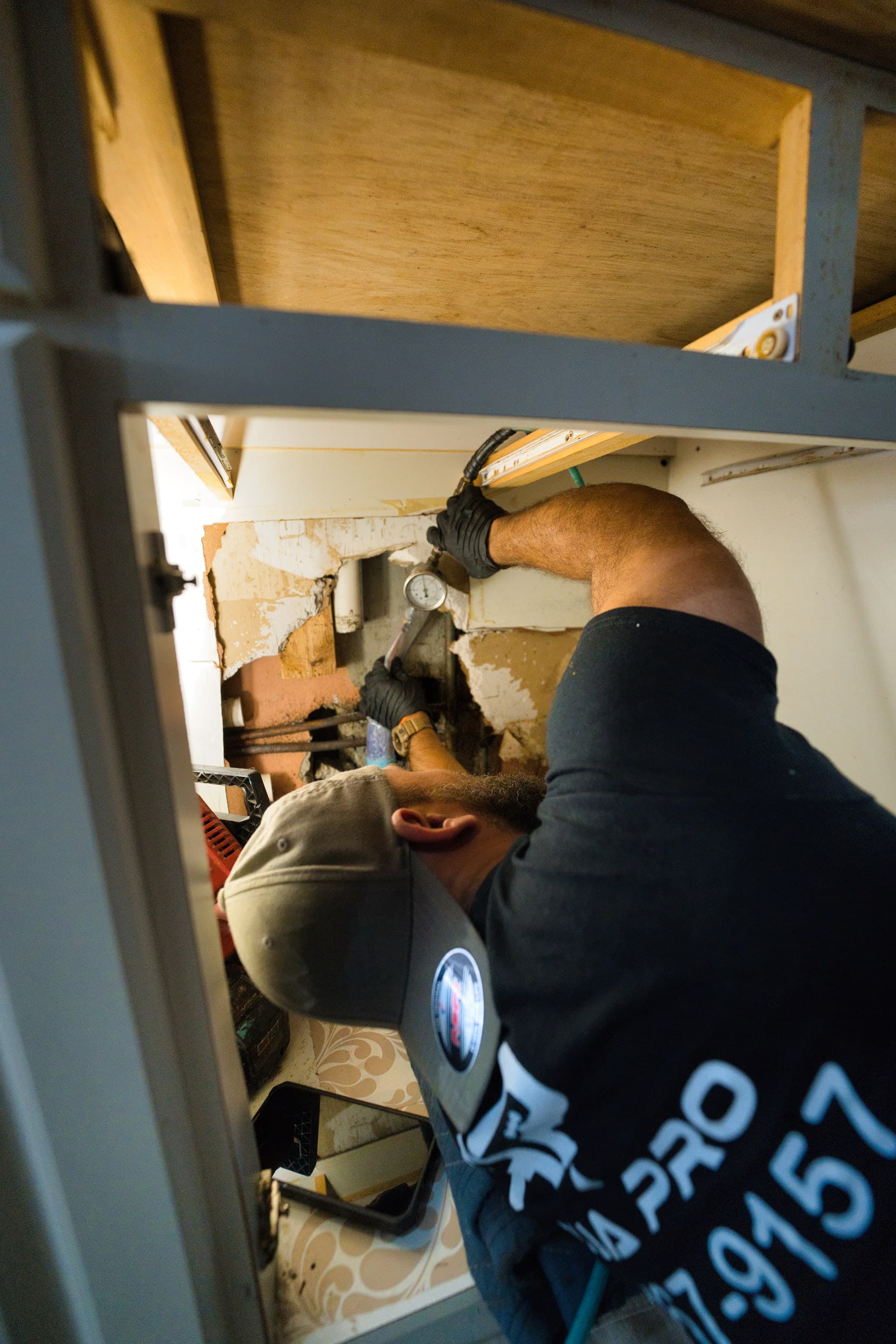
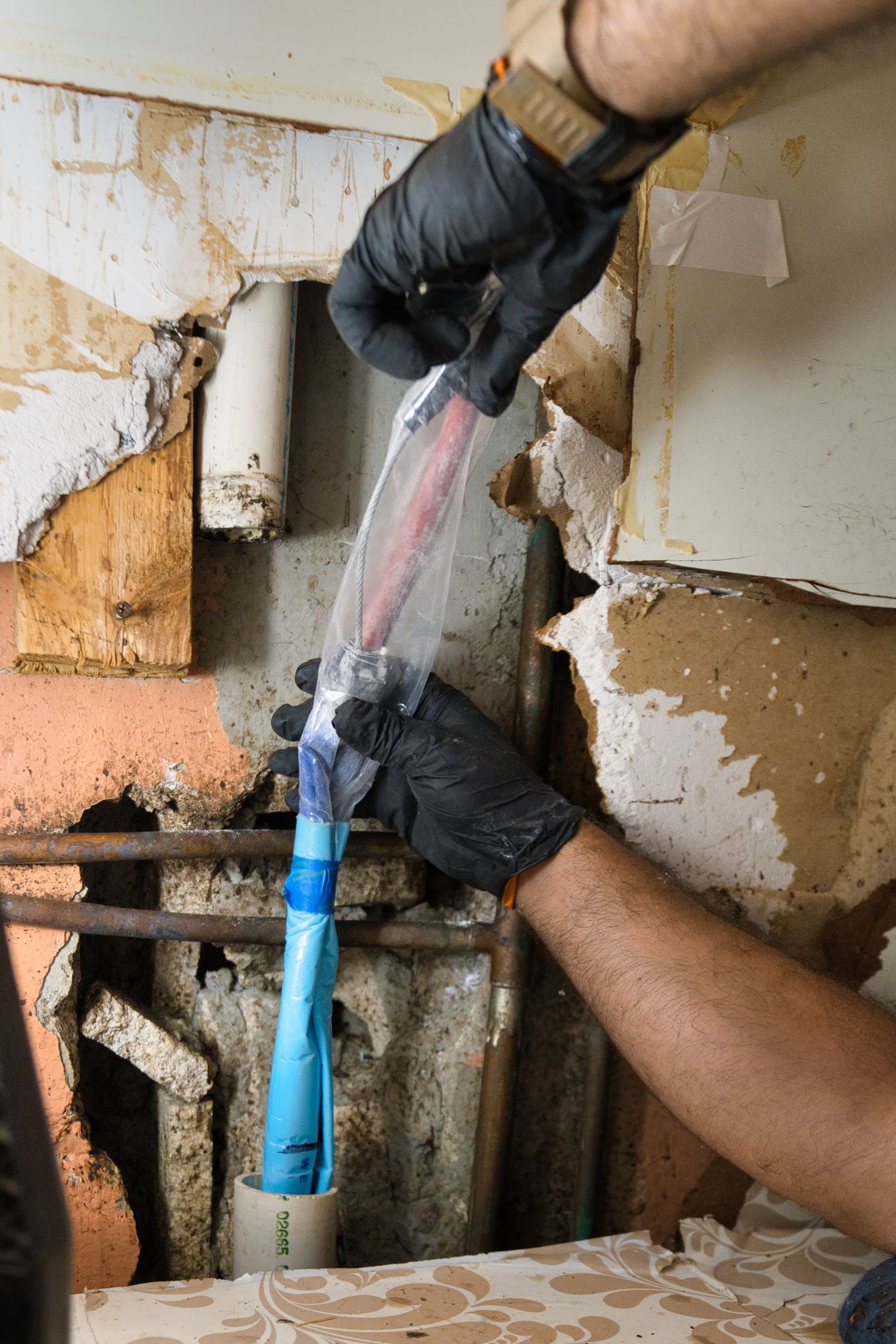
These crew photographs show different access arrangements. Your inspection and site conditions determine where we need to work and what restoration is included.

An Aqua Pro technician working at an opened wall access to a drain line
An Aqua Pro technician reaching a drain line through an opened kitchen cabinet
An Aqua Pro technician at an open pipe access inside a home
Gloved hands guiding equipment into a pipe access point

These are photographs of our technicians and equipment on the job.

Common questions

What people ask before they call.

Does old cast iron always need replacement?

No. Deposits and structural damage are different findings. We inspect the accessible condition and explain whether cleaning, lining or replacing a section fits.

Can a camera tell how many years my pipe has left?

No. Camera footage shows visible condition and access limits. It does not directly measure wall thickness or establish a remaining service life.

What happens to my flooring?

Your repair plan should state the access points and any opening required. Ask who is responsible for restoring tile, concrete or other finishes before approving the work.

Where we work

We serve Miami-Dade and Broward.

We serve properties in Miami-Dade and Broward. Tell us whether one fixture or several drains are affected, how often the problem returns and whether an earlier inspection exists. A short description is enough for us to begin.

We offer cast iron pipe repair in Miami, Coral Gables, Coconut Grove, Cutler Bay, Doral and Miami Shores, and throughout Miami-Dade and Broward, including Fort Lauderdale.

Talk to a licensed plumber

Tell us which drains keep giving you trouble.

Describe the problem and we will tell you whether it needs a camera inspection, a cleaning or a repair. We explain our proposed work and price before you approve it, and financing is available on every repair we do.

See what decides your price

You approve your price in writing before we begin your repair. Here is what affects it:

  • Your pipe’s condition decides how much cleaning comes first.
  • The length and size of your line set the equipment and materials.
  • Your access point changes the setup.
  • The repair method follows what we find.
  • A shared building line is quoted differently from a household line.
Read about financing for your repair