Sewer cleaning

Sewer Line Repair Methods: A Technical Guide for Miami Homeowners

When a sewer line fails in a Miami home, the homeowner usually inherits a vocabulary of methods they’ve never had to think about before — open-cut excavation, CIPP lining, pipe bursting, sectional repair, cast iron descaling. The methods aren’t interchangeable. The right choice depends on the pipe material, the location and pattern of the failure, the diameter of the line, and what’s sitting on top of it.

This guide walks through every method we use at Aqua Pro Plumbing, when each one is the correct call, and what the work actually looks like once a crew is on site. It’s written for homeowners and property managers who want to understand what’s behind the quote before they sign it.

Step One: Diagnosis Before Method

No competent sewer repair starts with a method recommendation. It starts with diagnosis. Two homes with the same symptom — recurring backups, sewer odors, slow drains — can have completely different underlying failures, and the repair method must match the failure.

The standard diagnostic tool is a CCTV sewer camera inspection. A self-leveling camera is fed through the cleanout or another access point, and the full length of the lateral is recorded in high resolution. The operator marks each defect location using a built-in transmitter and a surface locator, which gives an accurate depth and ground-level position for every problem area.

What the camera reveals determines the repair approach:

  • Channeling — the bottom of a cast iron pipe has corroded away while the top is still intact. The interior diameter is reduced but the pipe still holds shape. Candidate for trenchless lining.
  • Root intrusion at joints — clay or cast iron pipe with roots growing through joint failures. Candidate for trenchless lining after root cutting.
  • Belly or sag — a section of pipe has settled below grade and water pools instead of draining. Requires excavation and re-bedding. Cannot be solved by lining alone.
  • Full collapse — pipe has lost cross-sectional shape. Requires pipe bursting or open-cut replacement.
  • Offset joint — adjacent pipe sections have shifted, exposing the inside of the joint to soil. Trenchless if minor; excavation if severe.
  • Scale buildup — heavy mineral deposits restricting flow. Hydrojet cleaning first; structural assessment after.

A camera inspection takes 30 to 45 minutes on a residential job. Without one, every method recommendation that follows is a guess.

Method 1: Open-Cut Excavation

The traditional method, and still the right answer in specific situations. Open-cut means trenching down to the failed pipe, removing the old section, installing new pipe (usually PVC or HDPE), and backfilling the trench.

When Open-Cut Is the Right Choice

  • Pipe alignment has shifted significantly and needs to be re-graded
  • A belly in the line requires re-bedding the pipe at proper slope
  • The failed section is short and easily accessible (under turf, not under hardscape)
  • Pipe diameter needs to be upsized
  • Soil conditions or pipe damage make trenchless impossible

What an Open-Cut Job Looks Like

The crew locates the line and marks excavation depth based on the camera’s position log. A mini-excavator or hand-dig opens the trench to the depth of the failed pipe — typically 3 to 6 feet for residential lateral work in Miami’s sandy-limestone substrate. The failed section is cut out, new pipe is installed with proper bedding material, joints are sealed, and the trench is backfilled in compacted lifts.

The job ends with restoration — replanting landscaping, repouring sidewalk or driveway sections, and final grading. For a residential lateral, expect 1 to 3 days from excavation to restoration. The work itself is straightforward; the time investment is in restoration.

The Real Cost of Open-Cut in Miami

Quoted excavation cost is rarely the whole cost. Open-cut work in established Miami neighborhoods routinely involves removing and replacing landscaping, decorative concrete, irrigation lines, and sometimes utility relocations. A $4,000 excavation quote can become a $12,000 project once restoration is finalized. This is why trenchless methods, despite higher per-foot rates, often come in lower total.

Method 2: CIPP Lining (Cured-in-Place Pipe)

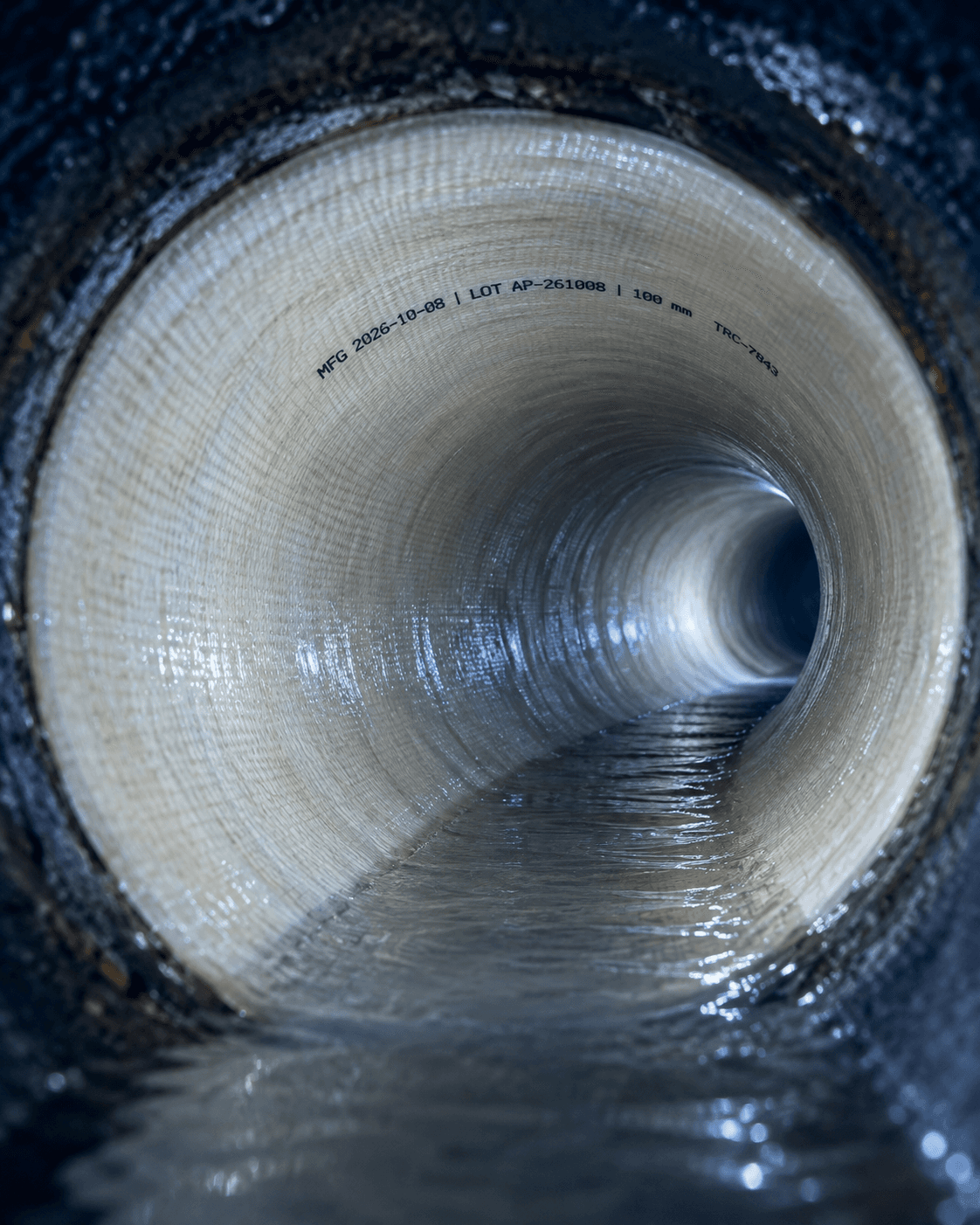
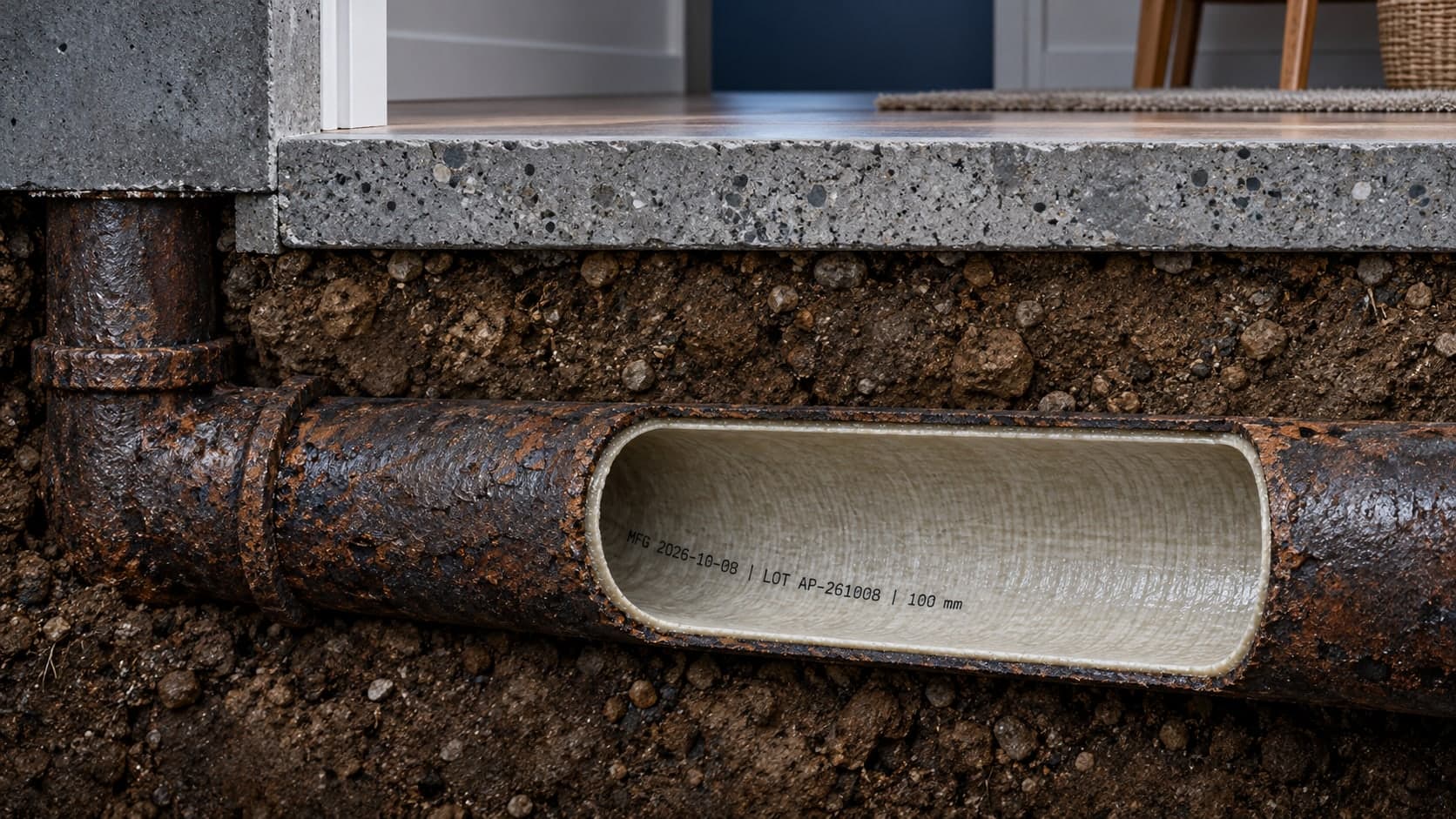
CIPP is the most-used trenchless method for residential and light commercial sewer repair in Miami. A resin-saturated felt or fiberglass liner is inserted into the existing pipe through a single access point, expanded against the host pipe walls with air or water pressure, and cured in place. The result is a new structural pipe formed inside the old one, with no joints across the lined length.

How CIPP Cures

Three cure methods are in common use, each with different time and equipment requirements:

  • Ambient air cure — slowest, 4 to 8 hours, lowest equipment cost. Used for shorter residential runs.
  • Hot water cure — 2 to 4 hours, requires a boiler truck. Standard for most residential and commercial work.
  • UV cure — fastest, under 30 minutes per 100 feet. Requires a UV light train run through the liner. Standard for commercial work and increasingly common on residential cast iron rehabilitation. Aqua Pro covers UV CIPP technology in detail in our UV CIPP article.

When CIPP Is the Right Choice

  • Pipe is structurally compromised but still holds its general shape
  • Existing diameter is acceptable (CIPP slightly reduces interior diameter — usually 3 to 6 percent)
  • Repair length is meaningful enough to justify equipment setup (typically 15+ linear feet)
  • Access requirements would make open-cut expensive or disruptive

CIPP is the method we recommend most often for cast iron pipe repair in older Miami homes — the existing cast iron usually still has enough structural integrity to host the liner, and the result is a smooth-bore pipe with no joints to fail.

Method 3: Pipe Bursting

Pipe bursting fragments the existing pipe in place and pulls a new HDPE pipe through the same path. A bursting head is pulled through the host pipe by a hydraulic winch on the receiving end; as the head moves forward, it splits the old pipe outward into the surrounding soil while pulling the new HDPE line in behind it.

When Pipe Bursting Is the Right Choice

  • Existing pipe has lost structural integrity (collapse or near-collapse)
  • Pipe alignment is acceptable but the host material can’t support a liner
  • Diameter needs to stay the same or be slightly increased
  • Soil conditions allow the burst material to dissipate

Where Pipe Bursting Falls Short

Bursting isn’t appropriate where adjacent utilities sit close to the line being burst — the displacement can damage water mains, gas lines, or electrical conduits within a few feet. We do utility locates before any bursting work and switch to open-cut or sectional repair when adjacent utility risk is unacceptable.

Method 4: Sectional Repair (Spot Liner)

For a localized defect on an otherwise sound pipe — a single cracked joint, a fractured section under a known access point — a sectional liner installs a short patch of cured-in-place material at the specific defect location. The patch is 2 to 4 feet long depending on the defect, installed through a cleanout or excavated access pit, and cured in place.

When Sectional Repair Makes Sense

  • A single, well-defined defect on otherwise good pipe
  • The rest of the line has been camera-inspected and confirmed sound
  • Future failure at a different location is unlikely (newer pipe with localized damage, not aging cast iron with systemic corrosion)

Sectional repair is the wrong call on a 70-year-old cast iron line with one bad section showing today and ten more sections about to fail. Spot fixes on aging pipe lead to repeat service calls. Full sewer main line repair or full CIPP lining is the durable answer in those cases.

Method 5: Mechanical Cleaning Before Any Repair

Most sewer repair jobs start with cleaning — hydrojetting or mechanical descaling — before the repair method itself begins. Scale, grease, and root mass have to come out before a camera can read pipe condition accurately and before a liner can bond against a clean substrate.

Hydrojetting at 3,000-4,000 PSI handles most cleaning requirements: it cuts roots, scours grease, and removes scale. For especially heavy cast iron scale, we’ll add a mechanical chain knocker or descaling cutter to the cleaning step. The post-clean camera inspection confirms the line is ready for repair and tells us whether the pipe can support trenchless restoration or needs excavation.

Cast Iron-Specific Considerations

Older Miami homes — anything pre-1975 — were almost universally plumbed with cast iron drain and sewer pipe. Cast iron corrodes from the inside out, with the failure pattern almost always at the bottom of the pipe (the invert) where waste water sits longest. By the time corrosion is visible, the pipe usually has decades of channeling and is structurally weakened but still in place.

This pattern makes cast iron unusually well-suited to trenchless restoration. The pipe usually holds its shape long enough to host a liner, and the existing pipe trajectory and grade are typically still correct — there’s no reason to dig up a line that just needs an interior rebuild.

What cast iron is not well-suited for is full-pressure hydrojetting without prior structural assessment. We always camera-inspect cast iron lines before jetting, and we adjust pressure based on pipe condition. A line at the edge of collapse can be pushed over the edge by aggressive cleaning.

How We Choose the Right Method for Your Line

The decision process at Aqua Pro Plumbing follows this order:

  1. Camera inspection first to identify the failure mode and map every defect on the line.
  2. Cleaning if needed to remove scale, grease, or root mass and get an accurate read on pipe structural condition.
  3. Post-clean camera to confirm pipe shape, identify all defects, and assess whether the pipe can support trenchless restoration.
  4. Method recommendation based on diameter, length of failure, pipe material, defect pattern, alignment condition, and access requirements.
  5. Written, fixed-price quote covering all work including any restoration. No estimate creep, no surprise fees.

The right method on a given line is rarely a debate once the camera has run. Most failures fall cleanly into one category and one repair approach. The reason quotes from different contractors vary so widely on the same job is usually because some contractors are quoting open-cut on every job (the only method they’re equipped for) while others are matching the method to the failure.

Cost Drivers

What changes total project cost more than anything else:

  • Length of pipe — longer runs cost more in liner material or excavation regardless of method.
  • Access points available — additional cleanouts or excavation pits required for the chosen method.
  • Surface restoration scope — landscaping, hardscape, driveway, sidewalk replacement.
  • Permit and inspection requirements — Miami-Dade and Broward both require pre- and post-install CCTV documentation on most trenchless work; permitting fees and inspection scheduling add to project timeline.
  • Coordination with other parties — HOA approval, neighbor easement access, utility locates.

Why This Matters for Long-Term Value

A sewer line that’s been properly repaired with the right method against the right failure will outlast the home in many cases. CIPP liners and pipe-burst HDPE both carry 50-year design lives. A correctly executed sewer repair is one of the few homeowner investments that doesn’t depreciate — the next owner inherits a line they don’t have to worry about for decades.

The wrong method, applied because a contractor was only equipped for one approach, leads to repeat service calls and incremental damage to the property each time the line has to be re-accessed. Picking the right method the first time matters more than getting the lowest initial quote.

Talk to Aqua Pro Plumbing About Your Sewer Line

If you’re seeing recurring backups, sewer odors, slow drains across multiple fixtures, or you’re buying a Miami home that needs a sewer inspection during due diligence, call us. We start every job with a camera inspection so the repair recommendation is based on what’s actually in your pipe — not on what equipment is in the truck.

We service Miami-Dade, Broward, and South Florida. Trenchless work — CIPP lining and pipe bursting — is what we do every day, and we have the equipment for full-pressure hydrojetting, mechanical descaling, sectional repair, and open-cut work when the line calls for it. Call 786-367-9157 to schedule a sewer inspection or talk through what your home is showing you.

Get help now